책 전체 · 1–32쪽
자라고 싶었던 동전
글 Fun Pilsner · 무료로 읽을 수 있어요. 가입은 필요 없어요.
동전 열 개와 종이 용 연을 갖고 싶은 마음. 알렉스와 함께 돈 쓰기, 저축, 투자와 그 선택의 불확실한 결과를 알아봐요.
무료 그림책 초안입니다. AI 번역과 낭독, 후반부 그림은 아직 검토 중이며 한국어 선생님의 확인을 기다리고 있어요.
32쪽 모두 낭독을 들을 수 있어요.
책 전체 펼치기02영어판 열기
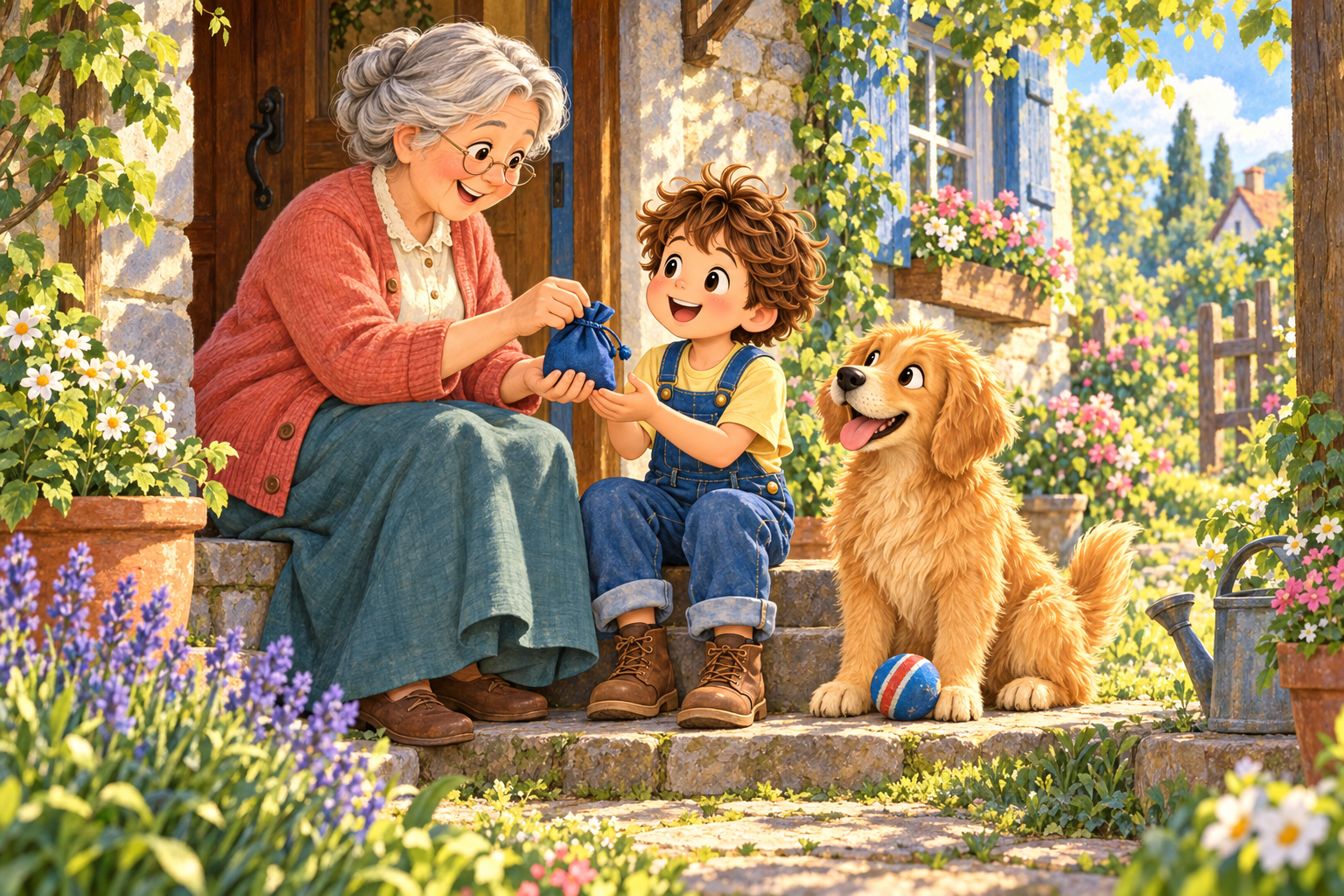
알렉스는 동전 열 개를 선물로 받았어요.
알렉스는 동전들을 창턱에 가지런히 늘어놓았어요.
버디가 그 옆에 공을 놓았어요.
이제 동전은 열 개, 밖에 나가 놀자는 초대는 하나였어요. 아주 끈질긴 초대였지요.
영어 원문과 비교하기
Alex had a present: ten coins.
He lined them up on the windowsill.
Buddy put a ball beside them.
Now Alex had ten coins and one very determined invitation to go outside.
03영어판 열기
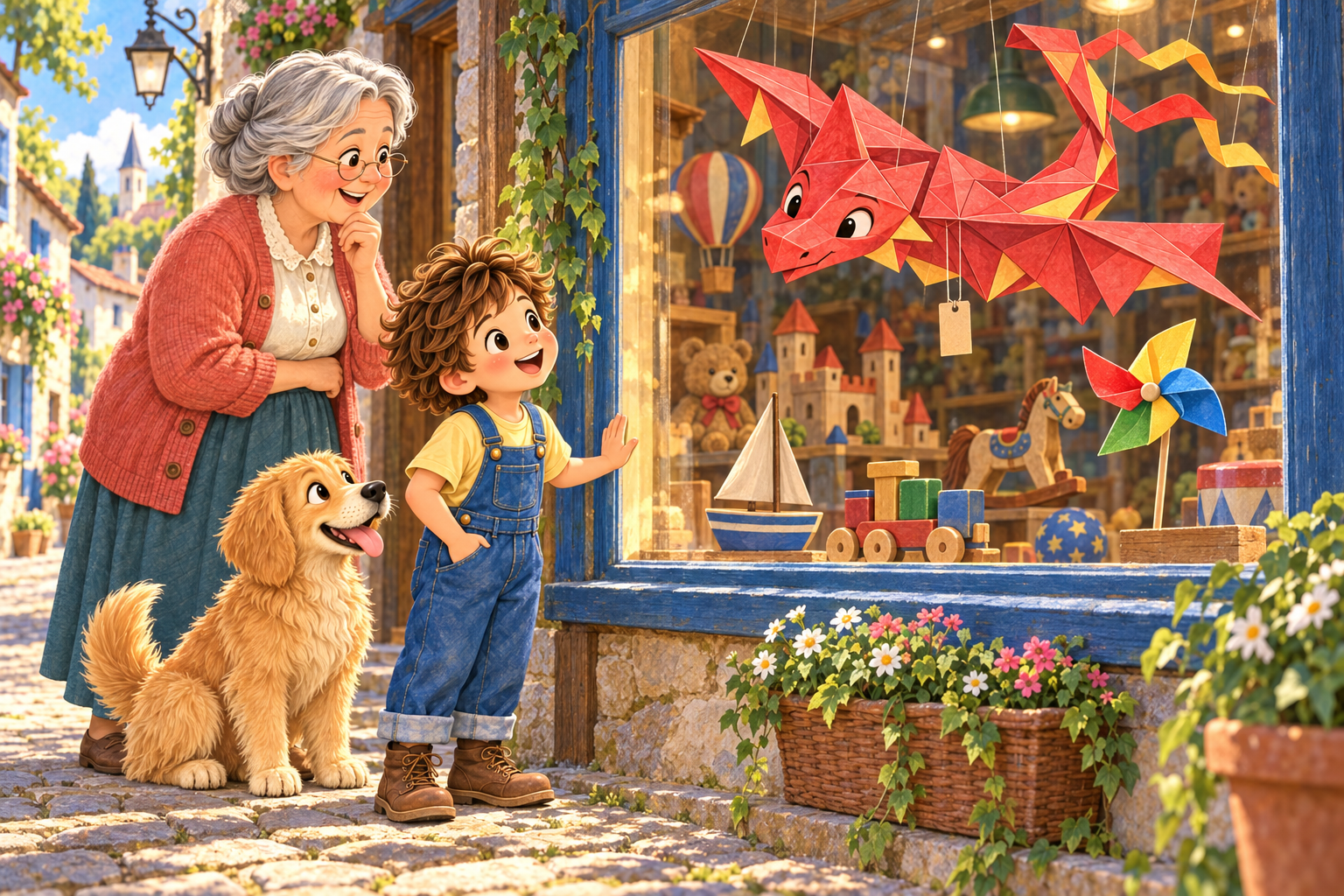
가게 진열창에 빨간 용 한 마리가 둥실 떠 있었어요.
거의 진짜 같았어요. 다만 종이로 만든 연이었고, 손에 쥘 줄이 달려 있었지요.
가격표에는 이렇게 쓰여 있었어요. 동전 열 개.
알렉스는 손으로 주머니를 꾹 눌렀어요.
“지금 바로 살 수 있어요!”
영어 원문과 비교하기
A red dragon floated in the shop window.
Almost a real one. Except it was made of paper, with a string to hold on to.
The price tag said: TEN COINS.
Alex pressed a hand against his pocket.
“I could buy it right now!”
04영어판 열기
“나중에 쓰게 몇 개는 남겨 둘래?” 할머니가 물었어요.
“그러면 용을 살 돈이 모자라요.” 알렉스가 말했어요.
진열창 아래쪽에서는 작은 바람개비가 돌고 있었어요.
용은 가만히 매달려 있었어요.
바람개비는 벌써 바람을 만났어요.
영어 원문과 비교하기
“Would you like to keep some for later?” Grandma asked.
“Then I wouldn't have enough for the dragon,” said Alex.
At the bottom of the window, a little pinwheel spun.
The dragon hung still.
The pinwheel had already found some wind.
06영어판 열기
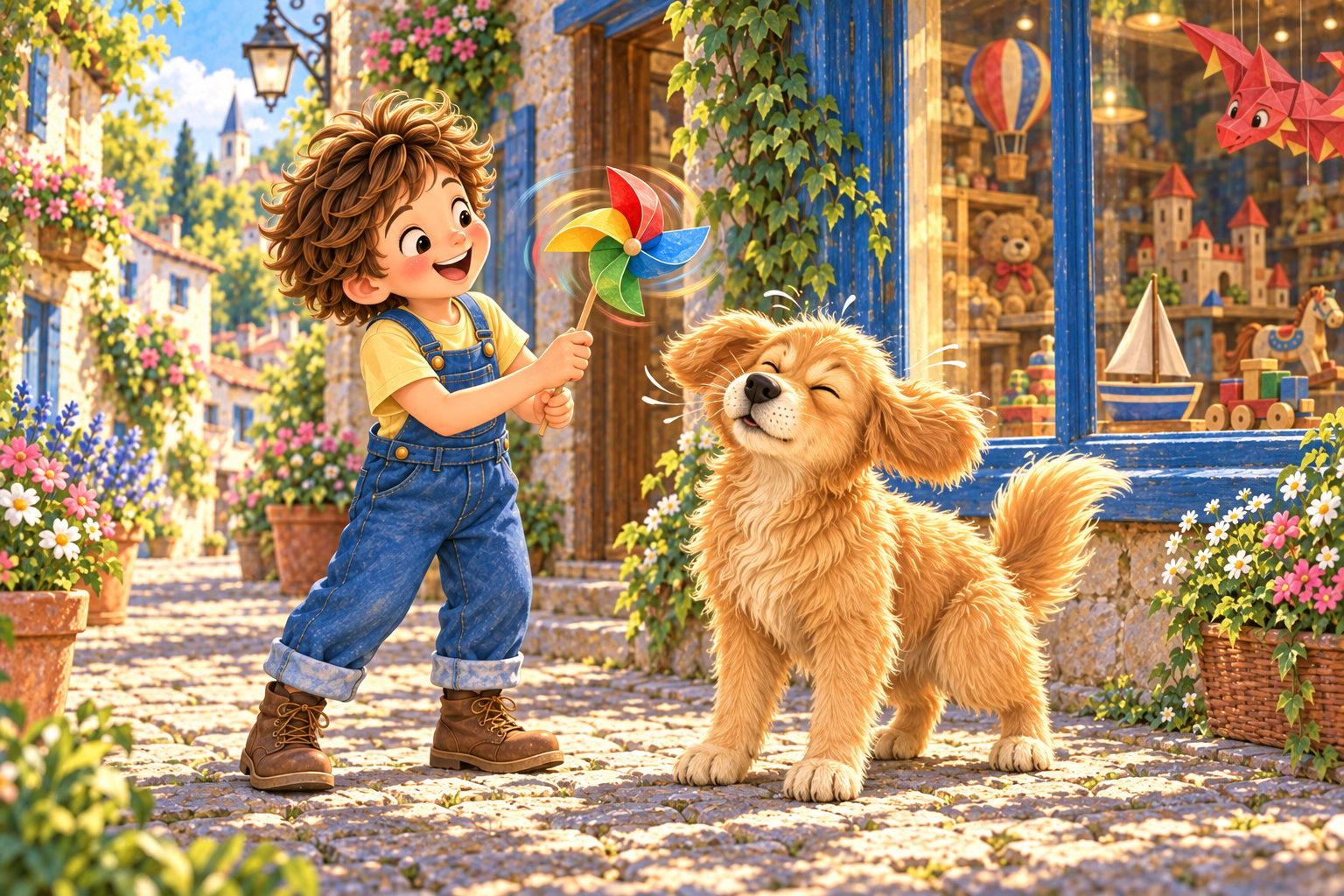
바람개비 값은 동전 두 개였어요.
두 개는 가게 주인에게 갔어요. 여덟 개는 알렉스에게 남았어요.
집으로 돌아오는 길 내내, 알렉스와 버디에게는 둘만의 작은 바람이 있었어요.
동전은 가끔 오늘을 즐거운 날로 만들어 주기도 해요.
영어 원문과 비교하기
The pinwheel cost two coins.
Two stayed with the shopkeeper. Eight stayed with Alex.
And all the way home, Alex and Buddy had a little wind of their very own.
Sometimes coins can make today a good day.
07영어판 열기
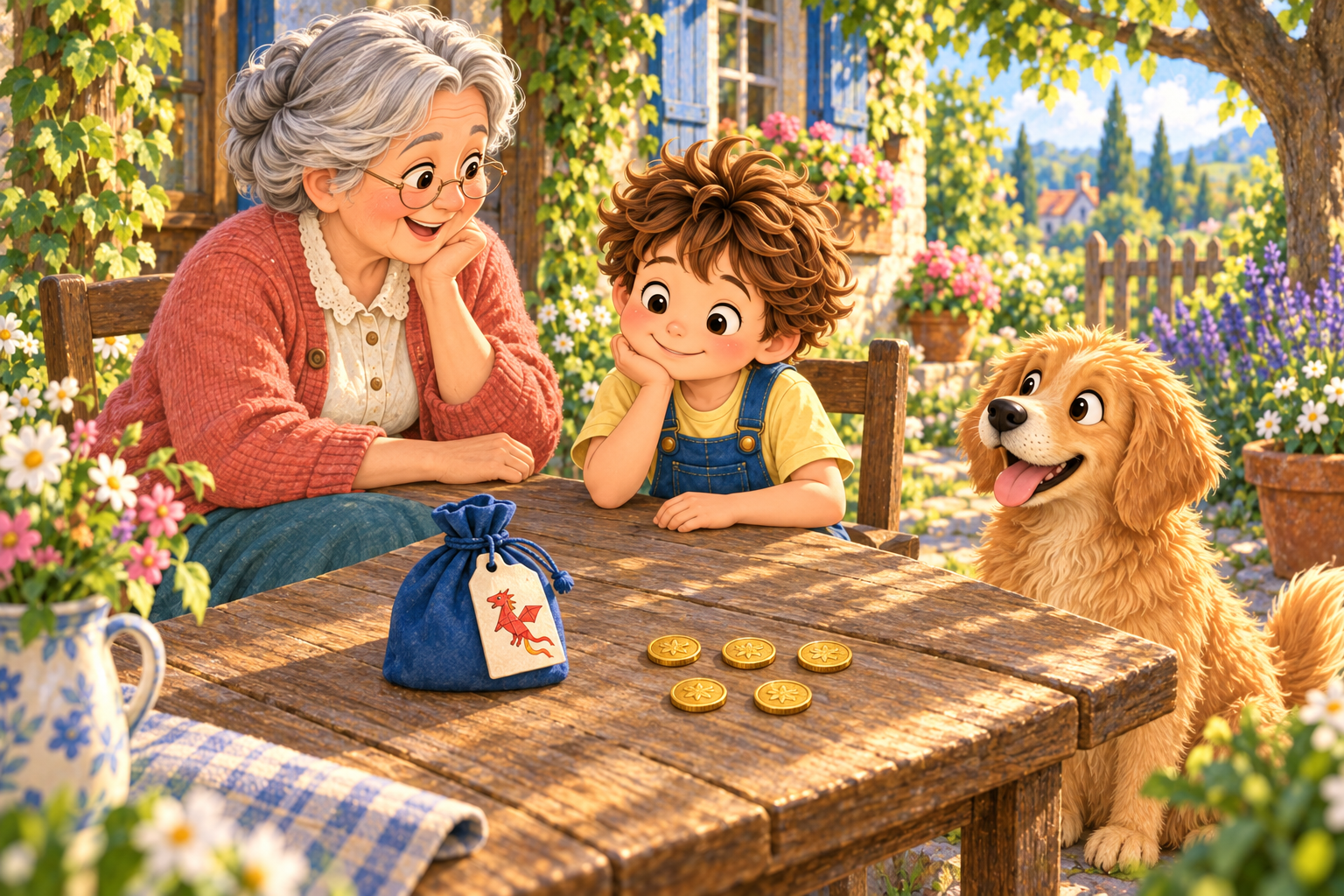
집에 온 알렉스는 동전 세 개를 파란 주머니에 넣었어요.
“커다란 용을 사려고. 언젠가는.”
알렉스는 이름표에 용을 그리고, 끈을 당겨 주머니를 꼭 닫았어요.
그 동전들은 알렉스가 저축한 돈이었어요. 지금 쓰지 않고 나중에 쓰려고 남겨 둔 돈이지요.
영어 원문과 비교하기
At home, Alex tucked three coins into a blue pouch.
“For the big dragon. Someday.”
He drew a dragon on the tag and pulled the pouch shut.
Those coins were his savings: money he was keeping now to use later.
08영어판 열기
탁자 위에는 동전 다섯 개가 놓여 있었어요.
“이 동전들도 넣어 둘까요?”
“그렇게 해도 되지.” 할머니가 말했어요. “아니면 사업에 돈을 넣는 게 어떤 건지 함께 알아볼 수도 있단다. 그걸 투자라고 해.”
알렉스는 동전들을 바라봤어요.
“어떤 사업이요?”
영어 원문과 비교하기
Five coins lay on the table.
“Should I put these away too?”
“You could,” said Grandma. “Or we could find out about putting money into a business. That's called investing.”
Alex looked at the coins.
“What kind of business?”
09영어판 열기
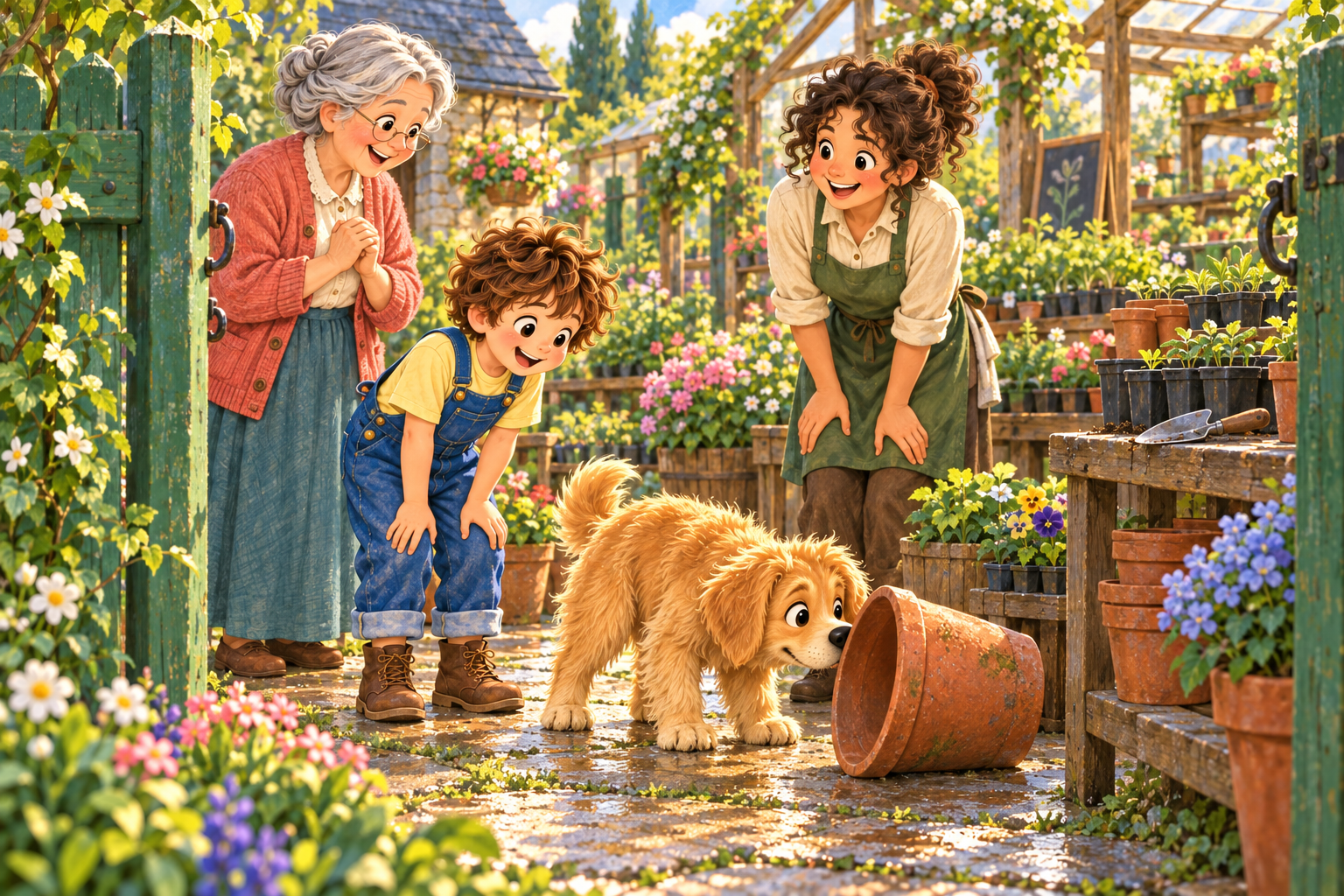
초록 대문 너머에서는 이웃들이 모종을 키워 팔고 있었어요.
흙 냄새, 비에 젖은 나무 냄새, 그리고 봄 냄새가 났어요.
“새 모종판과 씨앗이 필요해요.” 주인 아주머니가 말했어요.
버디가 빈 화분에 코를 쏙 들이밀었어요.
화분이 재채기를 했어요.
영어 원문과 비교하기
Behind a green gate, their neighbors grew young plants to sell.
It smelled of soil and rain-soaked wood and spring.
“We need new trays and seeds,” the owner told them.
Buddy poked his nose into an empty flowerpot.
The flowerpot sneezed.
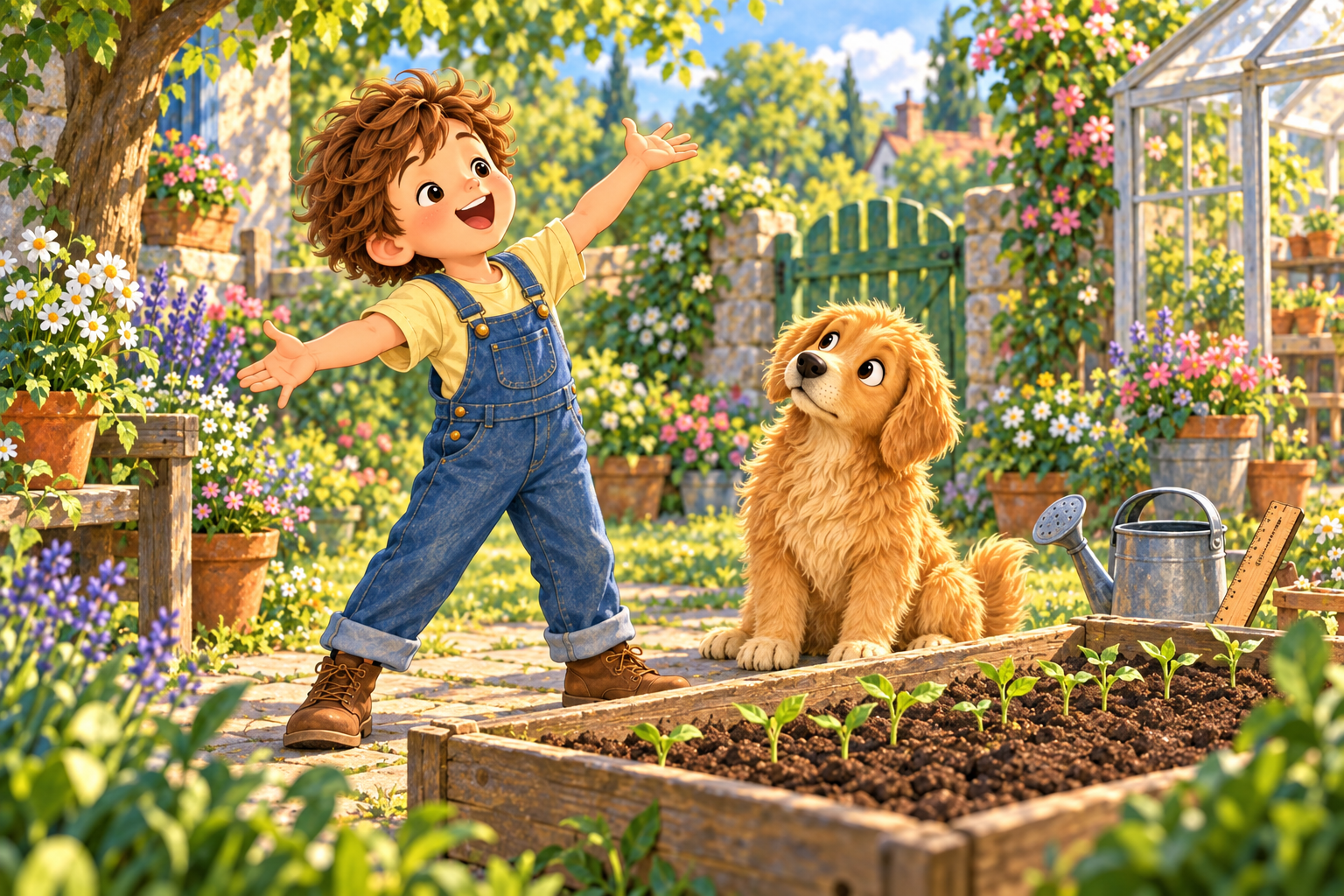
11영어판 열기
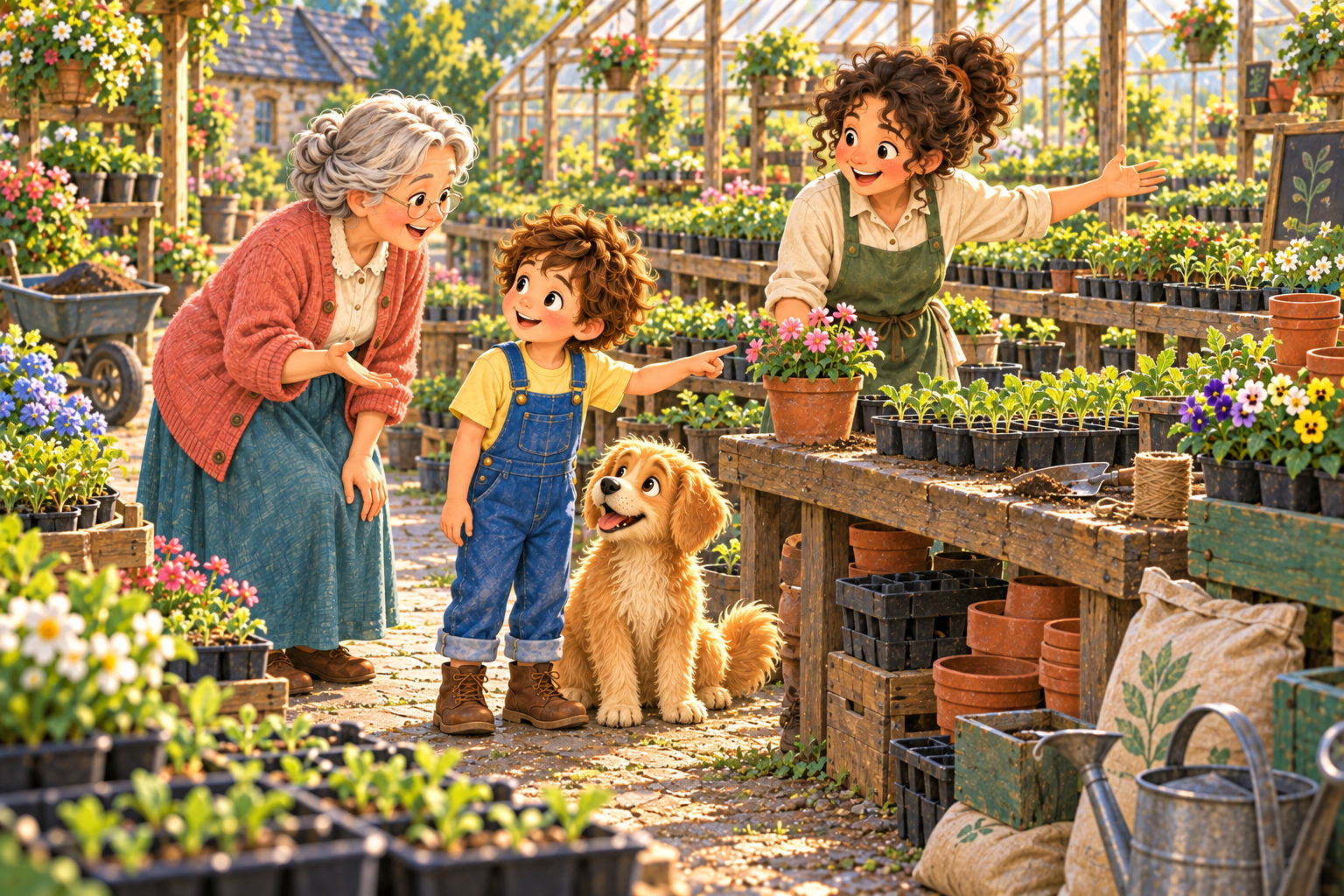
“아니.” 할머니가 웃으며 말했어요. “동전은 땅에 심어도 자라지 않아.”
“사람들은 그 돈으로 씨앗과 모종판, 도구를 사지. 그런 다음 다른 사람들이 사고 싶어 할 식물을 열심히 키우는 거야.”
“그럼 사업이 자라는 거예요?”
“바로 그거란다.”
영어 원문과 비교하기
“No,” said Grandma, smiling. “A coin won't grow in the ground.”
“People use the money to buy seeds, trays, and tools. Then they work hard to grow plants that other people will want to buy.”
“So it's the business that grows?”
“That's the idea.”
12영어판 열기
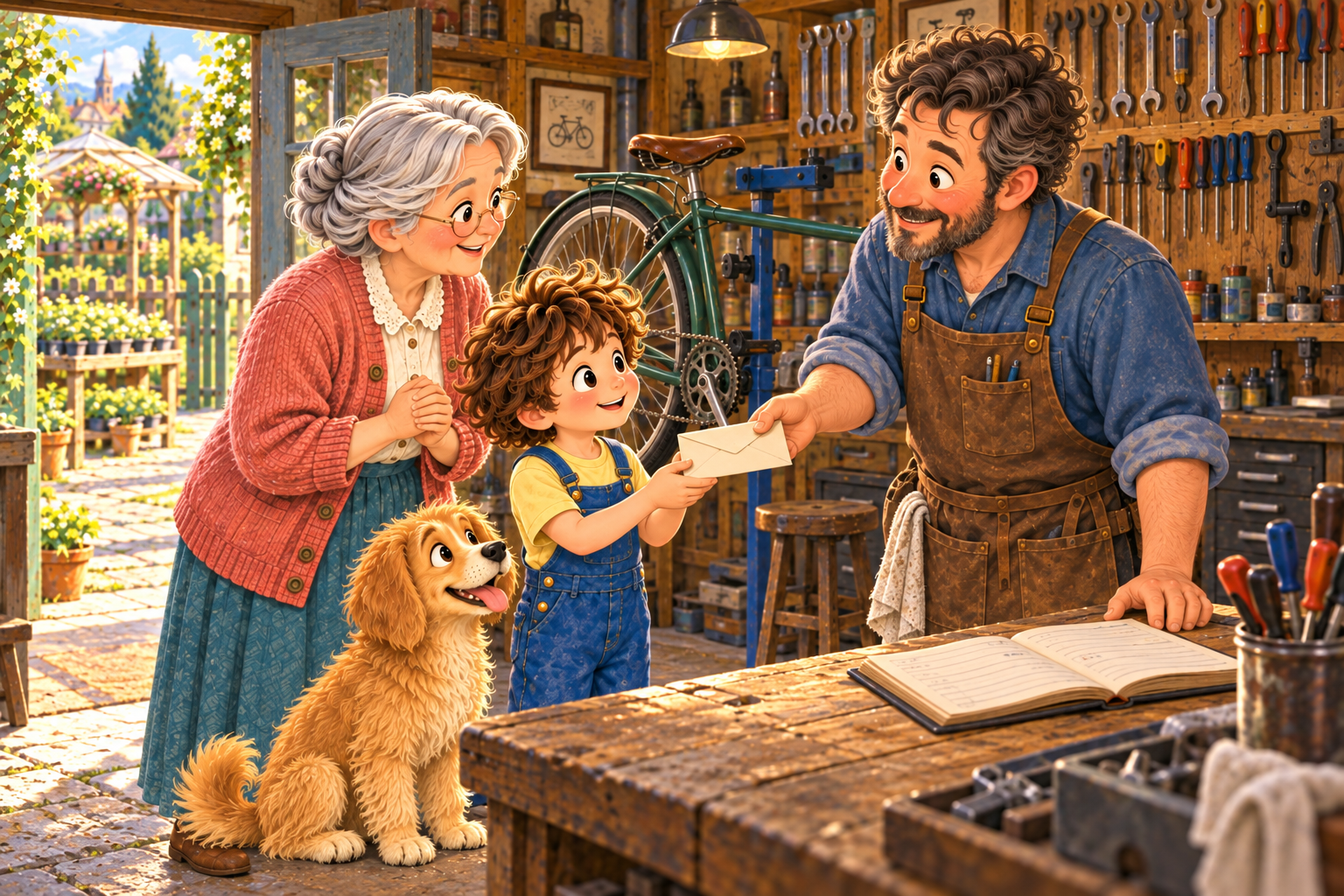
주인 아주머니가 모종 농장 이곳저곳을 보여 주었어요.
“우리 사업의 작은 몫을 살 수도 있어요. 그러면 이 사업의 주인들 중 한 명이 되는 거예요.”
“그럼 저 꽃이 제 것이 되는 거예요?”
“사업 전체의 작은 몫을 사는 거란다.” 할머니가 설명했어요. “화분 하나를 따로 갖는 게 아니라.”
영어 원문과 비교하기
The owner showed them around the plant nursery.
“You could buy a small share of our business. Then you'd be one of its owners.”
“Would that flower be mine?”
“A share of the whole business,” Grandma explained. “Not one particular flowerpot.”
13영어판 열기
“저도 돈을 받을 수 있어요?” 알렉스가 물었어요.
“그럴 수도 있지. 먼저 사업에 드는 비용을 다 내야 해. 그러고도 남는 돈을 이익이라고 한단다. 주인들은 그 돈을 나누기로 할 수도 있어.”
“제가 가진 사업의 몫이 작아도요?”
“이익을 나누게 되면 네 몫도 작겠지.”
영어 원문과 비교하기
“Would I get any money?” asked Alex.
“Maybe. First the business has to pay its bills. If there's money left after that, it's called profit. The owners may decide to share it.”
“Even if my share of the business is little?”
“Then your part of the profit would be little too.”
14영어판 열기
“아무도 꽃을 안 사면요?”
“사업이 손해를 볼 수도 있어. 그러면 네가 넣은 돈의 일부를 잃을 수도 있지. 전부 잃을 수도 있고.”
알렉스는 잠시 말이 없었어요.
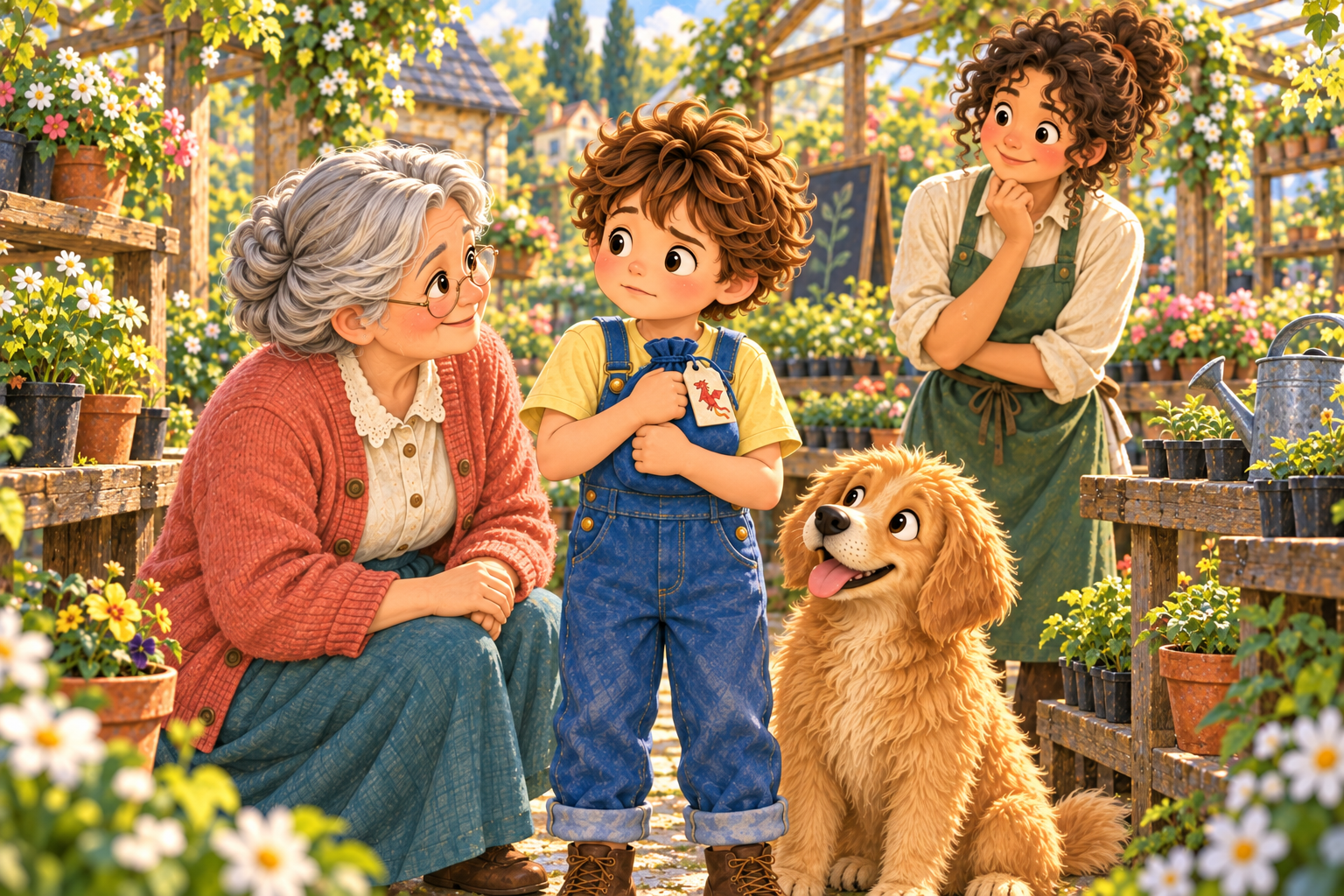
“그럼 파란 주머니에 있는 동전은 여기에 넣지 않을래요. 그건 용을 사는 데 필요하니까요.”
영어 원문과 비교하기
“What if nobody buys the flowers?”
“The business could lose money. And you could lose some of the money you put in. Or all of it.”
Alex was quiet for a moment.
“Then I'm keeping the coins in my blue pouch out of this. I need those for the dragon.”
15영어판 열기
할머니의 도움을 받아 알렉스는 모종 농장 사업에 동전 세 개를 넣었어요.
공책에는 알렉스가 가진 작은 몫을 적어 두었어요.
그 동전 세 개는 이제 알렉스의 주머니에 없었어요. 사업에 들어간 거예요.
손바닥에는 동전 두 개가 놓여 있었어요.
그리고 파란 주머니에는 여전히 세 개가 고이 들어 있었지요.
영어 원문과 비교하기
With Grandma's help, Alex put three coins into the nursery business.
They wrote down his little share in a notebook.
Those three coins weren't in his pocket anymore. They had gone into the business.
Two coins lay on his palm.
And three were still tucked away in the blue pouch.
16영어판 열기
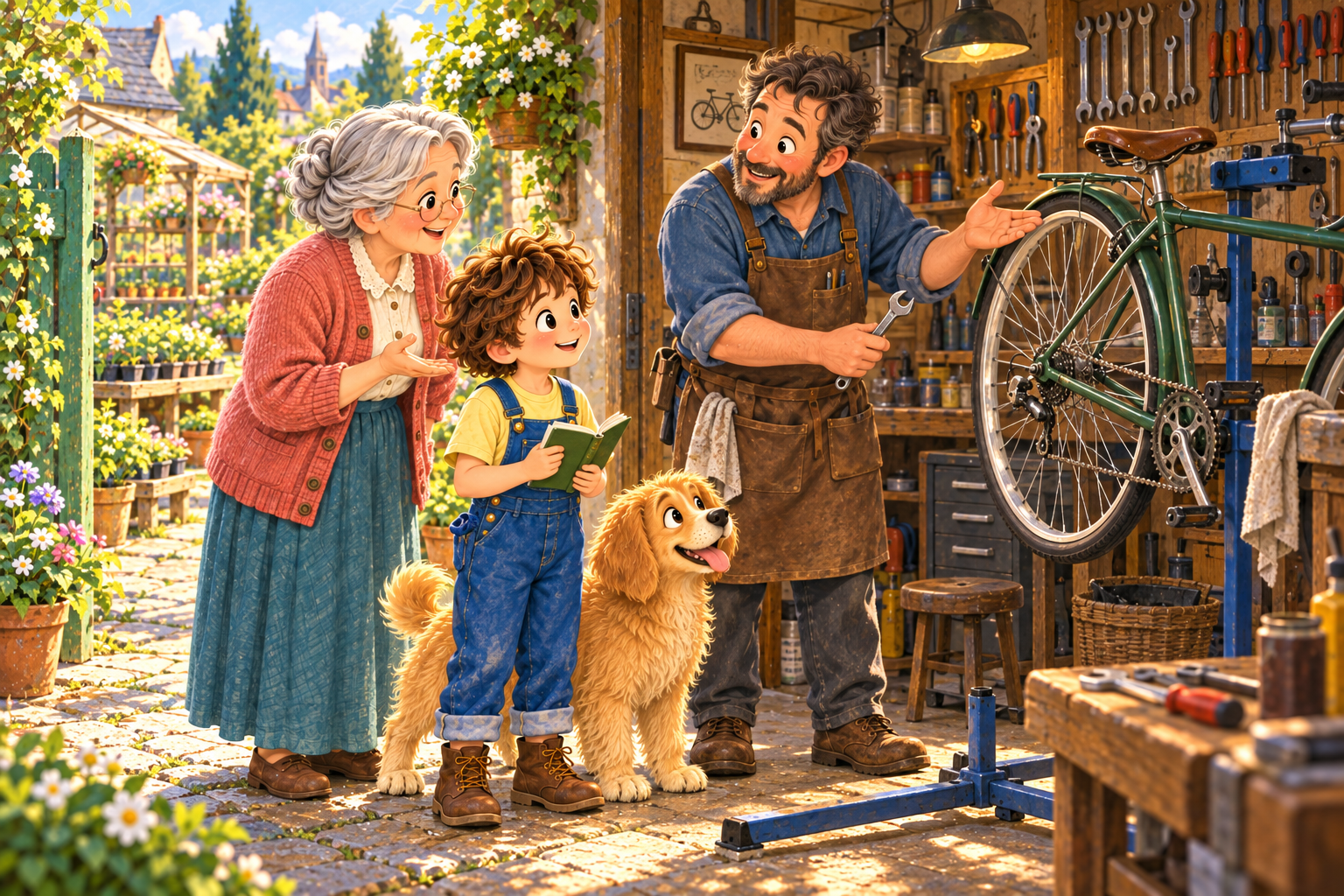
바로 옆에는 자전거 수리점이 있었어요.
따르릉! 자전거 벨이 울렸어요.
여기에는 씨앗 대신 도구가 필요했어요.
알렉스와 할머니는 수리공 아저씨에게 어떤 일을 하는지, 가게에는 어떤 비용이 드는지 물어봤어요.
알렉스는 손에 남은 마지막 동전 두 개로 이 사업의 작은 몫도 사기로 했어요.
영어 원문과 비교하기
Next door was a bicycle repair shop.
Ding! went a bell.
This place needed tools instead of seeds.
Alex and Grandma asked the repairman about his work and what the shop had to pay for.
Alex decided to use his last two coins to buy a small share of this business too.
17영어판 열기
“이제 전부 다 꽃에 달린 건 아니네요.” 알렉스가 말했어요.
“그래. 한쪽 사업은 잘되고 다른 쪽은 그렇지 않을 수도 있지. 하지만 수리점도 손해를 볼 수 있단다.” 할머니가 말했어요.
알렉스는 카드 한 장에 꽃을, 다른 한 장에는 바퀴를 그렸어요.
버디는 곁눈질로 바퀴를 지켜봤어요.
영어 원문과 비교하기
“Now it doesn't all depend on the flowers,” said Alex.
“That's right. One business may do well while another doesn't. But the repair shop could lose money too,” said Grandma.
Alex drew a flower on one card and a wheel on another.
Buddy kept one eye on the wheel.
18영어판 열기
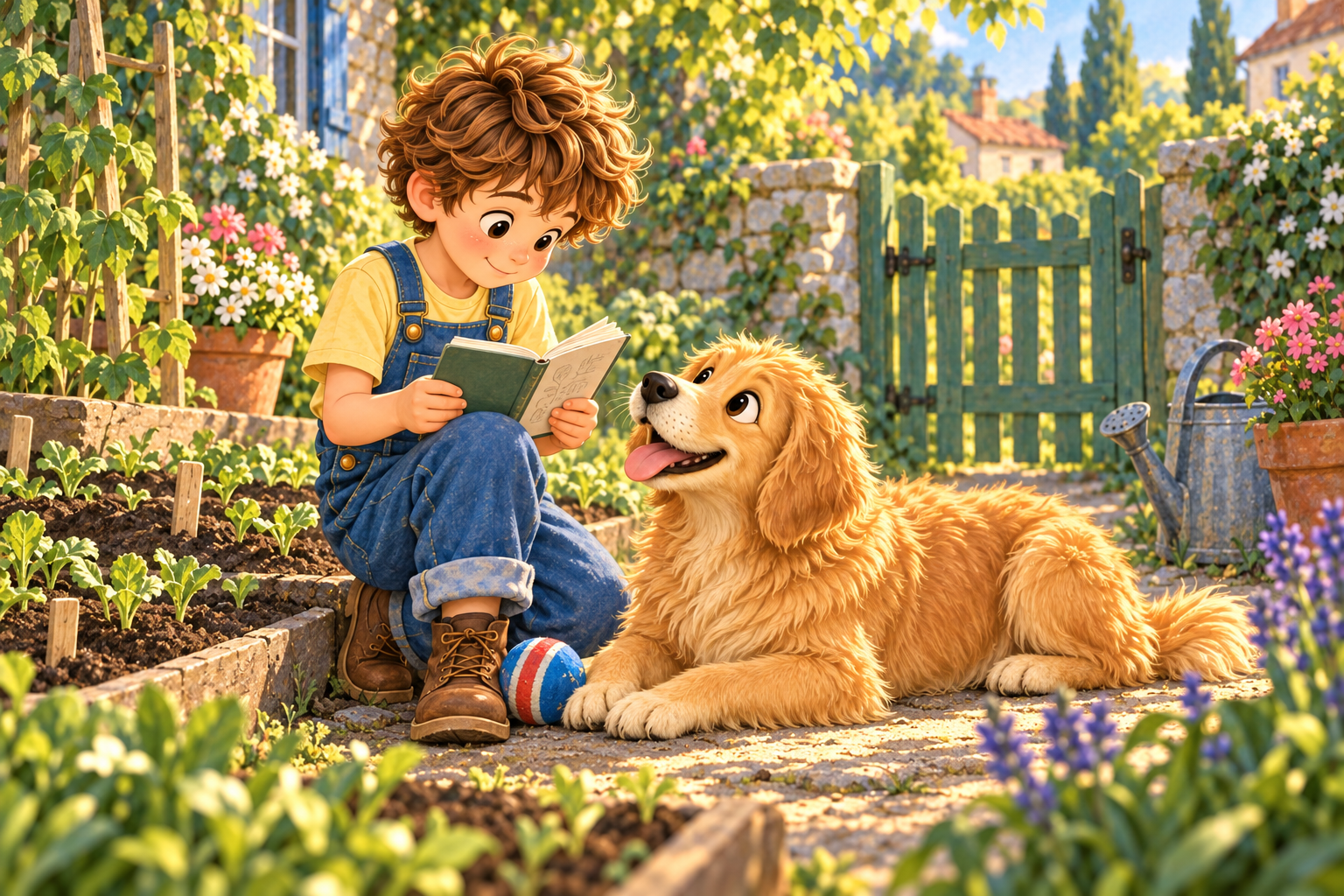
다음 날 아침, 알렉스는 자를 들고 모종 농장으로 달려갔어요.
그다음에는 물뿌리개를 들고요.
그다음에는 빨리빨리 자라는 꽃들을 노래하며 왔어요. 노래도 빨리빨리요.
꽃들은 노래를 들었어요.
그리고 계속 저마다의 속도로 자랐어요.
영어 원문과 비교하기
The next morning, Alex ran to the nursery with a ruler.
Then with a watering can.
Then with a very fast song about very fast flowers.
The flowers listened.
And carried on growing at their own speed.
19영어판 열기
“벌써 내일이 됐잖아요!” 그다음 날 알렉스가 말했어요.
할머니가 달력을 보여 주었어요.
한 장이 넘어가고 다음 장이 되었어요. 하지만 새 아침이 왔다고 새 손님들이 저절로 찾아오는 건 아니었어요.
알렉스는 한 장을 더 넘겼어요.
혹시 모르니까요.
영어 원문과 비교하기
“But it's tomorrow already!” Alex said the next day.
Grandma showed him the calendar.
One page had given way to the next. But a new morning didn't bring new customers all by itself.
Alex turned another page.
Just in case.
20영어판 열기
버디가 공을 가져왔어요.
알렉스는 모종을 바라봤어요.
버디가 알렉스의 신발 위에 공을 놓았어요.
알렉스는 공책을 살펴봤어요.
그러자 버디는 길을 가로막고 누웠어요.
이 정원에서 한 친구가 기다리는 건 돈이 아니었어요.
알렉스였지요.
영어 원문과 비교하기
Buddy brought his ball.
Alex watched the seedlings.
Buddy put the ball on Alex's shoe.
Alex checked the notebook.
So Buddy lay right across the path.
Someone in this garden wasn't waiting for money.
He was waiting for Alex.
21영어판 열기
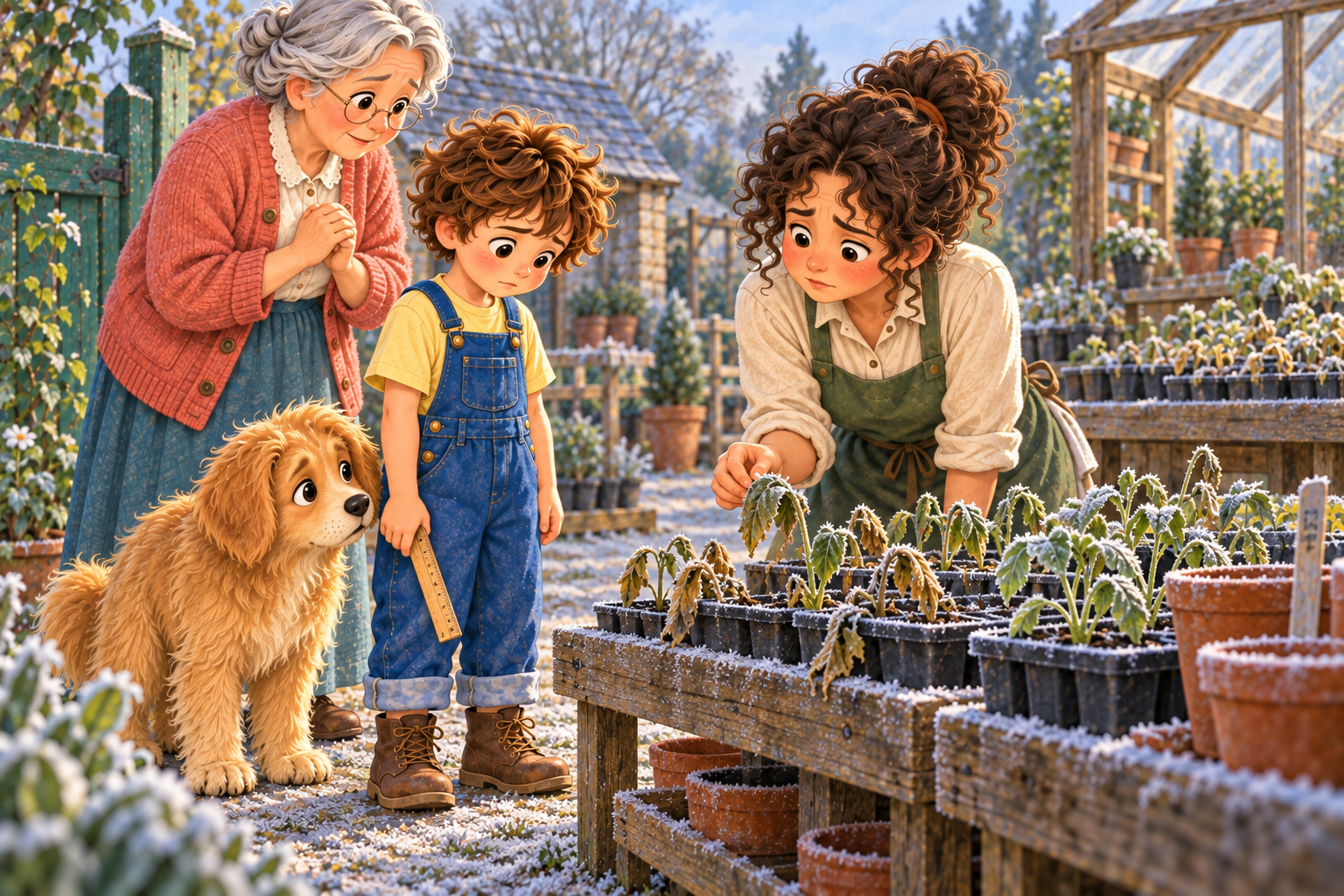
어느 날 밤, 뜻밖에 서리가 내렸어요.
아침이 되자 모종 몇몇이 축 늘어져 있었어요.
주인 아주머니는 작은 잎들을 조심스레 들어 올렸어요. 하지만 살릴 수 없는 모종도 있었어요.
알렉스는 손에 든 자를 돌리다 멈췄어요.
정원은 아주 조용했어요.
영어 원문과 비교하기
One night, an unexpected frost crept in.
By morning, some of the seedlings had wilted.
The owner gently lifted their little leaves. But some of the plants couldn't be saved.
Alex stopped turning the ruler in his hands.
The garden was very quiet.
22영어판 열기
“이 모종들은 팔 수 없겠어요.” 주인 아주머니가 말했어요.
씨앗과 모종판을 사는 데 돈은 이미 썼어요. 하지만 모종 농장은 그 비용을 모두 감당할 만큼 돈을 벌지 못했어요.
사업이 손해를 본 거예요. 알렉스가 가진 작은 몫의 가치도 전보다 줄었어요.
알렉스는 갑자기 그 동전 세 개가 다시 보고 싶어졌어요.
영어 원문과 비교하기
“We won't be able to sell these plants,” said the owner.
The money for their seeds and trays had already been spent. The nursery hadn't earned enough to cover all those costs.
The business had lost money. Alex's little share was worth less now too.
All at once, he wished he could see his three coins again.
23영어판 열기
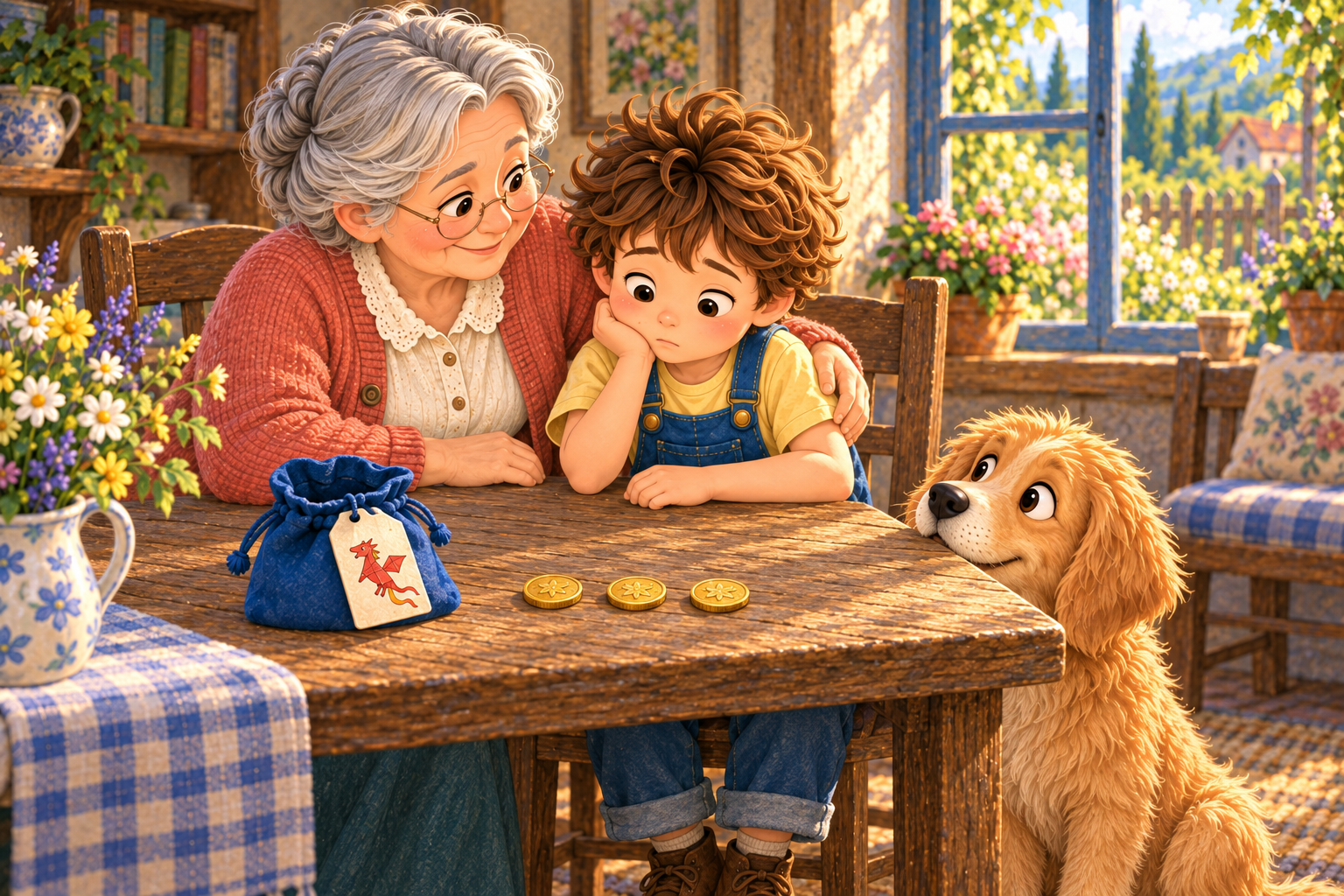
“제가 자꾸 빨리하라고 해서 그런 거예요?”
“아니야.” 할머니가 말했어요. “너 때문에 서리가 내린 게 아니란다. 좋은 사업도 어려움을 겪을 수 있어.”
“더 오래 기다리면 돈이 다 돌아올까요?”
할머니가 알렉스를 꼭 안아 주었어요.
“그럴 수도 있지. 하지만 누구도 약속할 수는 없어.”
영어 원문과 비교하기
“Was it because I kept trying to hurry things?”
“No,” said Grandma. “You didn't bring the frost. Even a good business can run into trouble.”
“If I wait longer, will it all come back?”
Grandma put her arms around him.
“It might. But no one can promise.”
24영어판 열기
집에 돌아온 알렉스는 파란 주머니를 열었어요.
하나. 둘. 셋.
저축한 동전들은 그대로 있었어요. 그 동전들은 모종 농장에 넣지 않았으니까요.
다른 동전 두 개는 수리점에 넣었어요. 모종 농장과는 전혀 다른 사업이지요.
알렉스는 다시 끈을 당겨 주머니를 닫았어요.
영어 원문과 비교하기
At home, Alex opened the blue pouch.
One. Two. Three.
His saved coins were still there. He hadn't put them into the nursery.
He had put two coins into the repair shop—a different business altogether.
Alex pulled the pouch shut again.
25영어판 열기
다음 날, 알렉스는 다시 자를 집어 들었어요.
문 앞에 잠시 서 있었어요.
그러고는 자를 도로 내려놓았어요.
“가자, 버디. 어떻게 되어 가는지는 나중에 알아봐도 돼.”
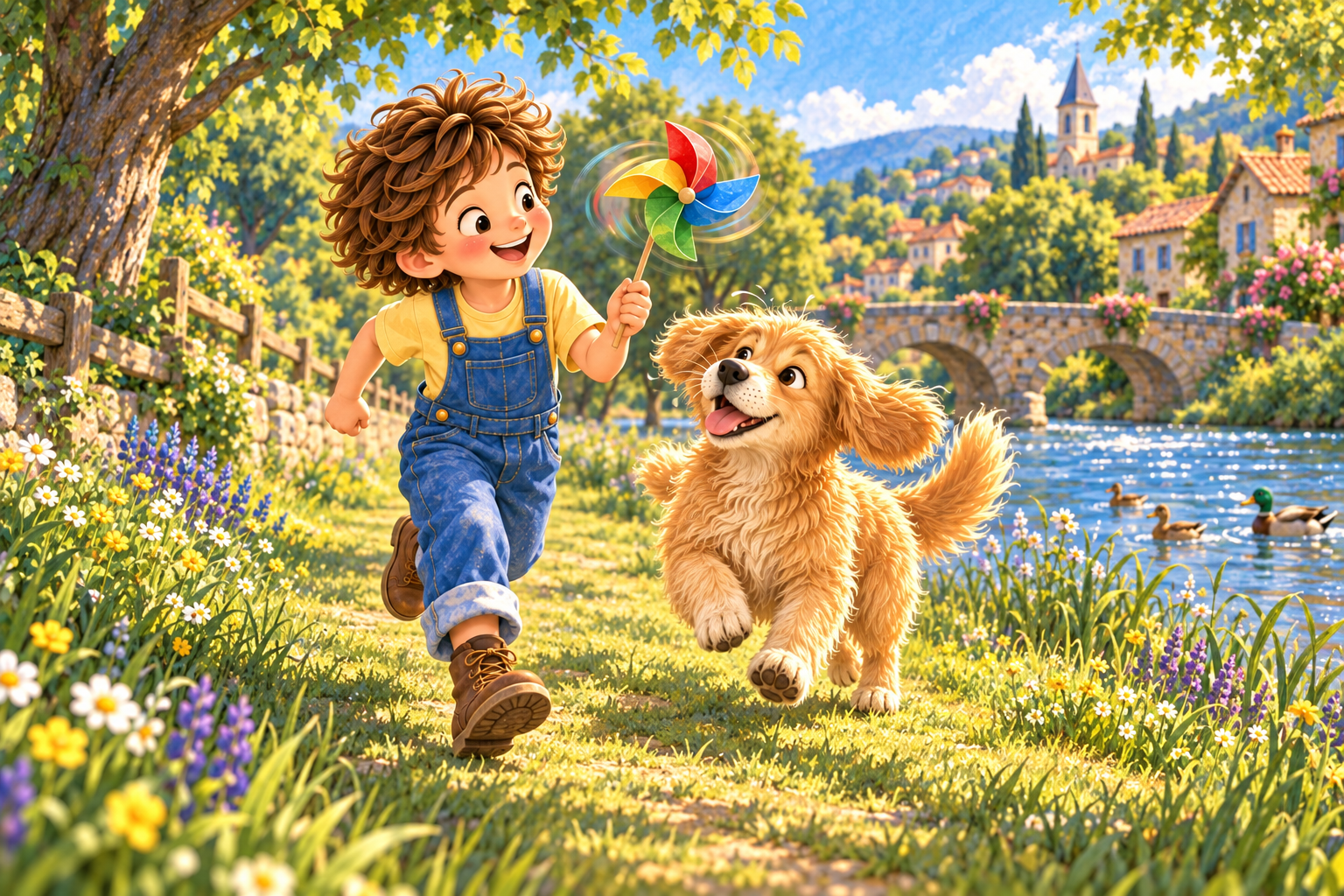
둘은 강가로 달려갔어요.
바람개비는 쌩쌩 돌았어요. 드디어 자기만의 계획이 생긴 것처럼요.
영어 원문과 비교하기
The next day, Alex picked up the ruler again.
He stood by the door.
Then he put it back.
“Come on, Buddy. I can check on things later.”
They ran down to the river.
The pinwheel spun so fast, it seemed to have a plan of its own at last.
26영어판 열기
봄날의 물웅덩이가 말랐어요.
샌들 대신 장화를 신었어요.
알렉스는 자라서 재킷 하나가 작아졌어요. 버디의 버릇은 하나도 달라지지 않았어요.
그동안에도 사람들은 모종 농장과 수리점에서 계속 일했어요.
잘되는 날도 있었고, 그렇지 않은 날도 있었어요.
영어 원문과 비교하기
The spring puddles dried up.
Sandals gave way to boots.
Alex outgrew a jacket. Buddy didn't outgrow a single habit.
All that time, people kept working at the nursery and the repair shop.
Some days went well. Some didn't.
27영어판 열기
어느 날, 수리점은 비용을 모두 내고도 돈이 남았어요. 이익이 생긴 거예요.
주인들은 그중 일부를 나누기로 했어요. 알렉스도 조금 받았어요.
“제가 기다려서 주는 거예요?”
“사업의 몫을 가진 주인이기 때문이지.” 할머니가 설명했어요. “사람들이 열심히 일했고, 이번에는 사업에서 이익이 났단다.”
영어 원문과 비교하기
One day, after paying all its bills, the repair shop had made a profit.
The owners decided to share some of it. Alex received a little of it too.
“For waiting?”
“For owning a share of the business,” Grandma explained. “People worked hard, and this time the business made money.”
28영어판 열기
모종 농장은 아직 손해를 만회하지 못했어요.
알렉스도 아직 커다란 종이 용을 사지 못했어요.
하지만 이제 알렉스는 알았어요. 미래를 위해 남겨 둔 돈도 여러 모습으로 기다릴 수 있다는 걸요.
어떤 돈은 주머니에 머물러요.
어떤 돈은 사업에 들어가요. 그곳에서 앞으로 무슨 일이 생길지는 아무도 확실히 알 수 없어요.
영어 원문과 비교하기
The nursery still hadn't recovered from its losses.
Alex still hadn't bought the big paper dragon.
But now he knew there was more than one way for money to wait for the future.
Some stayed in a pouch.
Some went into a business, where no one knew for certain what would happen next.
29영어판 열기
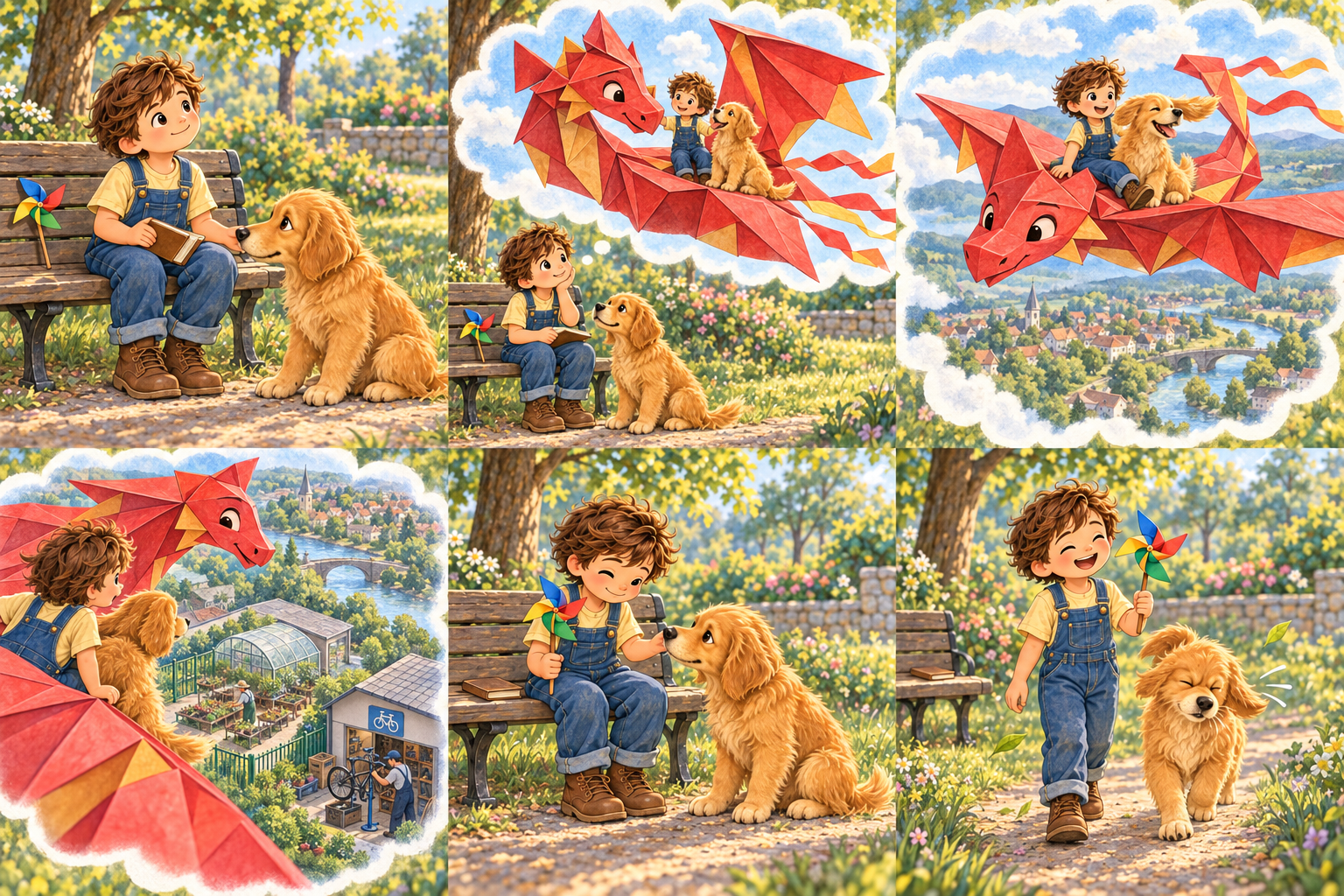
버디가 알렉스의 손을 코로 톡 건드렸어요.
알렉스는 공책을 옆에 내려놓았어요.
언젠가, 만약에…
알렉스는 상상했어요. 빨간 종이 용이 넓은 등을 낮춰 둘을 태워 주는 거예요. 그러고는 살며시 지붕 위로 날아올랐어요. 버디의 귀가 깃발처럼 펄럭였어요.
아래에서는 주인 아주머니가 살아남은 모종들을 돌보고 있었어요. 수리공 아저씨는 자전거를 고치고 있었고요. 알렉스의 동전 다섯 개는 씨앗과 도구를 사는 데 보탬이 되었어요.
버디가 알렉스의 손을 다시 톡 건드렸어요. 알렉스는 눈을 깜박였어요.
알렉스는 바람개비를 집어 들었어요.
빙그르르!
버디가 재채기를 했어요.
둘은 함께 길을 나섰어요.
어떤 좋은 일들은 기다리지 않아도 되었어요.
영어 원문과 비교하기
Buddy nudged Alex’s hand.
Alex put his notebook aside.
What if, one day…
He imagined the red paper dragon dipping its broad back to welcome them aboard. Then up they went, gently, over the rooftops. Buddy’s ears flew like flags.
Below, the gardener tended surviving seedlings. The mechanic mended a bicycle. Alex’s five coins had helped buy seeds and tools.
Buddy nudged his hand again. Alex blinked.
He picked up his pinwheel.
Whirrr!
Buddy sneezed.
Off they went, together.
Some good things didn’t have to wait.
30영어판 열기
이 동전 열 개가 네 것이라고 상상해 봐요.
어떤 동전은 지금 쓰고 싶나요? 어떤 동전은 저축하고 싶나요? 어른의 도움을 받아 사업에 넣어 보고 싶은 동전도 있나요? 없어도 괜찮아요.
단추 열 개를 준비하거나 동전 열 개를 그려 봐요. 나만의 계획을 세워 봐요.
영어 원문과 비교하기
Imagine these ten coins are yours.
Which would you spend now? Which would you save? Which, if any, might you put into a business with a grown-up's help?
Find ten buttons or draw ten coins. Make a plan of your own.
31영어판 열기
놀이용 동전 열 개를 세 칸에 나누어 놓아 봐요. 쓰기, 저축하기, 투자하기예요. 어느 칸이든 비워 두어도 돼요.
알렉스와 똑같이 고를 필요는 없어요.
무엇을 위해 돈이 필요한가요? 얼마나 기다릴 수 있나요? 투자한 돈이 돌아오지 않는다면 무엇이 달라질까요?
내 계획을 어른에게 이야기해 주세요.
쓰기
저축하기
투자하기돈을 잃을 위험이 있어요.
영어 원문과 비교하기
Divide your ten pretend coins among three places: Spend, Save, and Invest. You can leave any place empty.
You don't have to choose what Alex chose.
What do you want your money for? How long would you be willing to wait? What would change if the money you invested didn't come back?
Tell a grown-up about your plan.
32영어판 열기
함께 읽는 어른께
이 이야기는 대화를 시작하기 위한 것이며, 어디에 투자할지 권하는 이야기가 아닙니다. 작은 사업의 지분을 사는 과정은 의도적으로 단순하게 표현했습니다. 동전은 가상의 단위이며, 알렉스의 선택은 가족의 돈을 나누는 모범 답안이 아닙니다.
저축과 투자는 다릅니다. 주머니에 넣어 둔 돈은 저절로 불어나지 않습니다. 지분을 갖는다는 것은 사업을 일부 소유한다는 뜻입니다. 특정한 꽃이나 도구, 계산대의 돈을 가져갈 권리를 뜻하지 않습니다.
매출과 이익은 같지 않습니다. 사업에는 지불해야 할 비용이 있습니다. 주인들은 이익을 사업에 남겨 둘 수도 있고, 일부를 나눌 수도 있습니다. 아무런 지급이 없을 수도 있습니다. 이 이야기에서 알렉스가 받은 돈은 처음 투자한 돈을 돌려받은 것이 아닙니다.
투자하면 넣은 돈의 일부 또는 전부를 잃을 수 있습니다. 서로 다른 곳에 투자하면 한 사업에만 의존하는 정도를 줄일 수 있지만, 위험이 사라지지는 않습니다. 이야기 속 두 사업은 이 생각을 처음 만나 보는 예시일 뿐입니다. 시간이 흐른다고 해서 돈이 늘거나 손실이 회복된다는 보장은 없습니다.
이렇게 물어보세요. “왜 동전을 땅에 심어도 싹이 나지 않을까? 사업의 지분을 갖는 것과 꽃을 사는 것은 어떻게 다를까? 알렉스는 왜 파란 주머니를 따로 남겨 두었을까?” 아이가 놀이용 동전을 나누는 방법을 두고 ‘똑똑하다’거나 ‘어리석다’고 평가하지 마세요.
아이는 가족의 수입을 책임지지 않으며, 투자해야 할 의무도 없습니다. 아이의 실제 돈에 관한 결정을 내릴 때에는 책임 있는 어른이 함께해야 합니다.
영어 원문과 비교하기
This story is an invitation to talk, not advice about where to invest. Buying shares in small businesses is deliberately simplified here. The coins are imaginary units, and Alex's choices are not a model for dividing up a family's money.
Saving and investing are different. Money in a pouch doesn't grow by itself. A share means part ownership of a business, not the right to take a particular flower, tool, or money from the cash register.
Sales aren't the same as profit: a business has costs to cover. The owners may keep profits in the business or distribute some to its owners. There may be no payment at all. The payment in this story is not a return of Alex's original investment.
An investment can lose some or all of the money put into it. Different investments can reduce dependence on one business, but they don't remove risk. The story's two businesses offer only a first glimpse of that idea. Time doesn't guarantee growth or recovery from a loss.
Ask: “Why won't a coin sprout in the ground? How is owning a share different from buying a flower? Why did Alex keep his blue pouch?” Avoid calling a child's choices about the pretend coins “smart” or “silly.”
A child is not responsible for the family's income and does not have to invest. Any real decisions about a child's money need a responsible adult's involvement.