01
A moedinha que queria crescer
Alex, Buddy e dez moedinhas
O livro inteiro · Páginas 1–32
Por Fun Pilsner · Leitura gratuita, sem cadastro.
Com dez moedas e o desejo de ter uma pipa, Alex descobre o que é gastar, guardar e investir — com escolhas e resultados incertos.
Rascunho ilustrado gratuito. A tradução, a narração por IA e as novas ilustrações continuam em revisão. A verificação por falantes nativos ainda está pendente.
As 32 páginas têm narração.
Abrir o livro inteiroAlex, Buddy e dez moedinhas
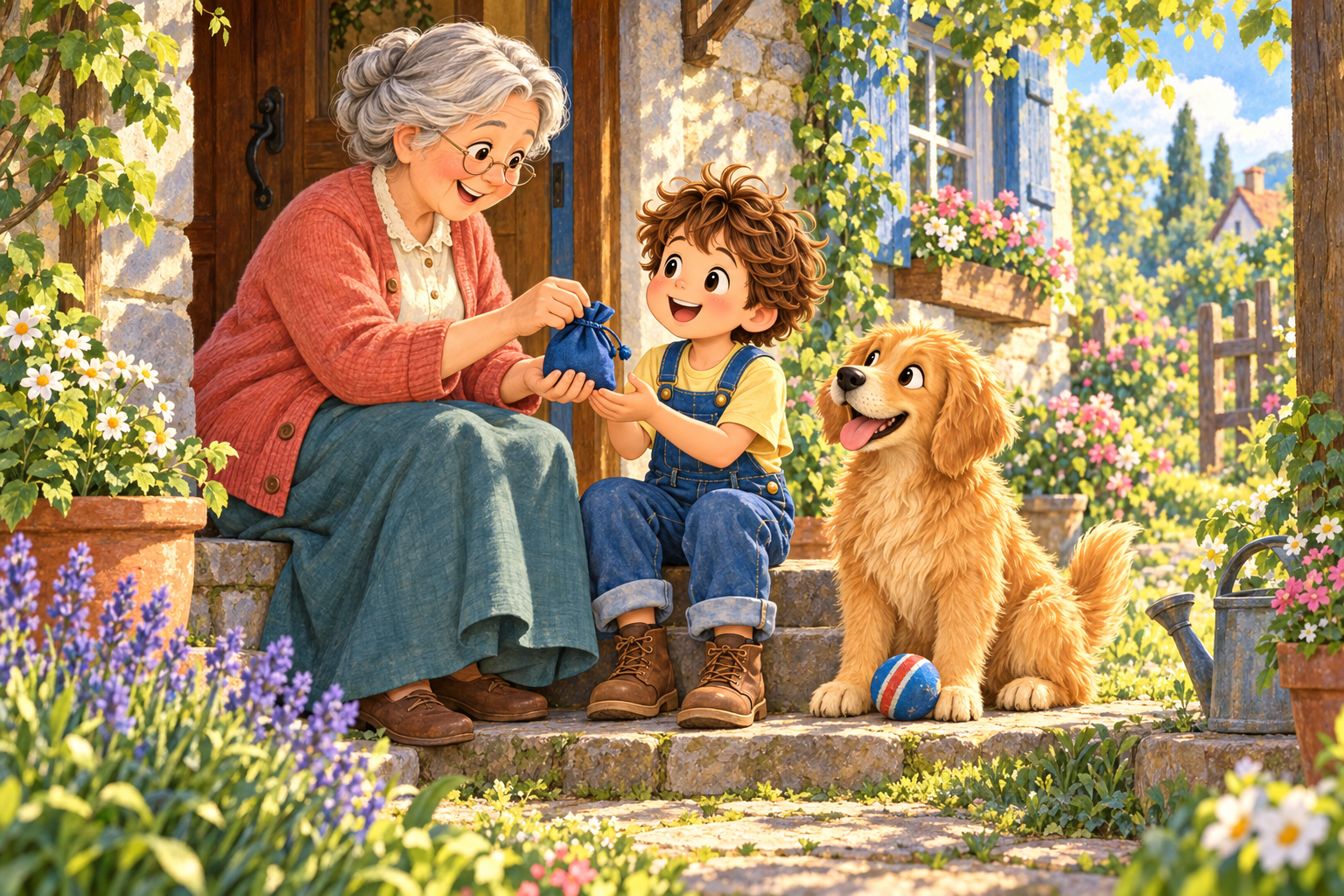
Alex ganhou um presente: dez moedas.
Ele enfileirou as moedas no parapeito da janela.
Buddy colocou uma bola ao lado delas.
Agora Alex tinha dez moedas e um convite muito insistente para sair.
Alex had a present: ten coins.
He lined them up on the windowsill.
Buddy put a ball beside them.
Now Alex had ten coins and one very determined invitation to go outside.
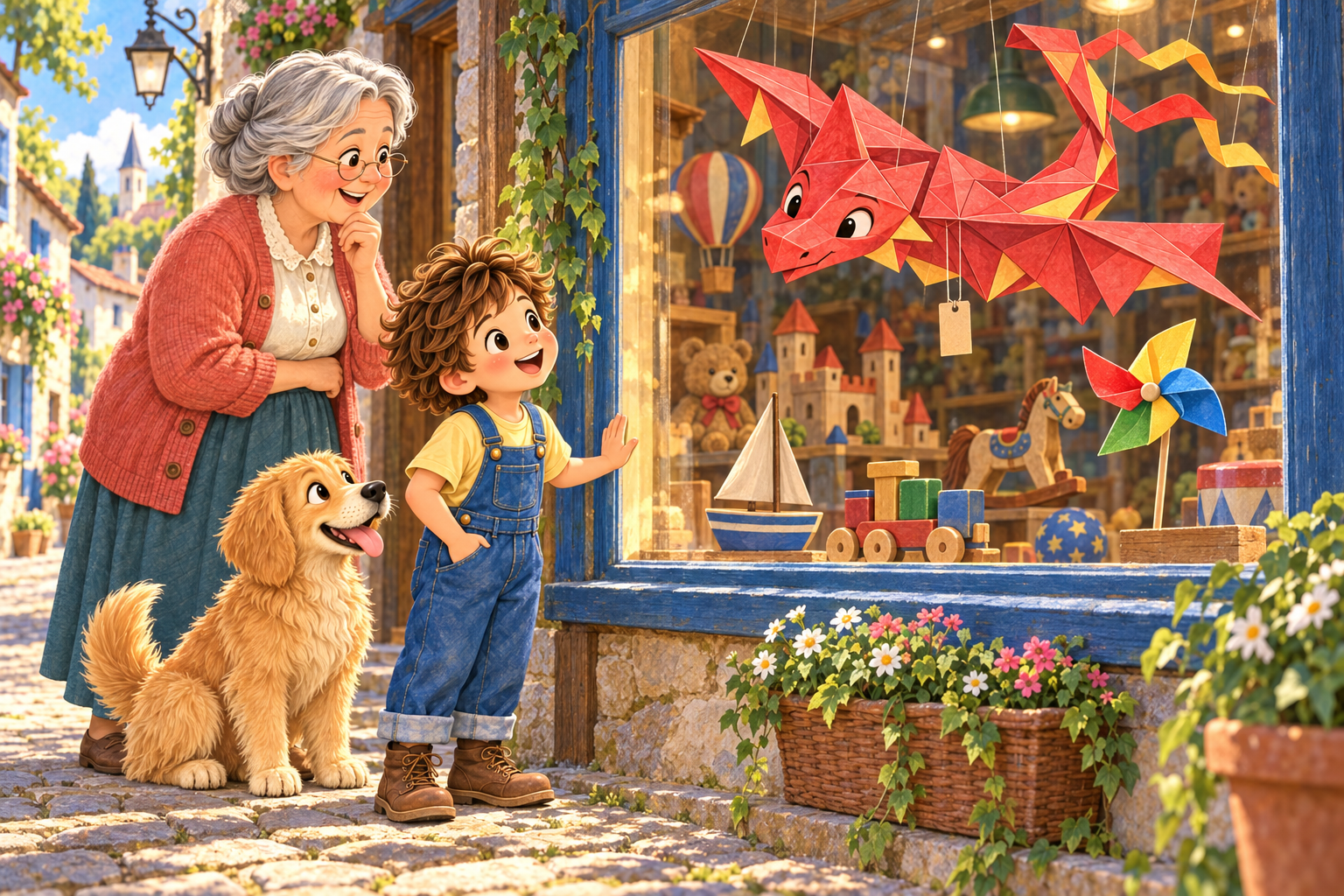
Um dragão vermelho flutuava na vitrine da loja.
Quase de verdade. Só que era uma pipa de papel, com uma linha para segurar.
Na etiqueta estava escrito: DEZ MOEDAS.
Alex encostou a mão no bolso.
— Eu posso comprar agora mesmo!
A red dragon floated in the shop window.
Almost a real one. Except it was made of paper, with a string to hold on to.
The price tag said: TEN COINS.
Alex pressed a hand against his pocket.
“I could buy it right now!”
— Quer guardar algumas para depois? — perguntou a vovó.
— Aí não vai dar para comprar o dragão — disse Alex.
Um pequeno catavento girava na parte de baixo da vitrine.
O dragão estava pendurado, bem parado.
O catavento já tinha encontrado um ventinho.
“Would you like to keep some for later?” Grandma asked.
“Then I wouldn't have enough for the dragon,” said Alex.
At the bottom of the window, a little pinwheel spun.
The dragon hung still.
The pinwheel had already found some wind.
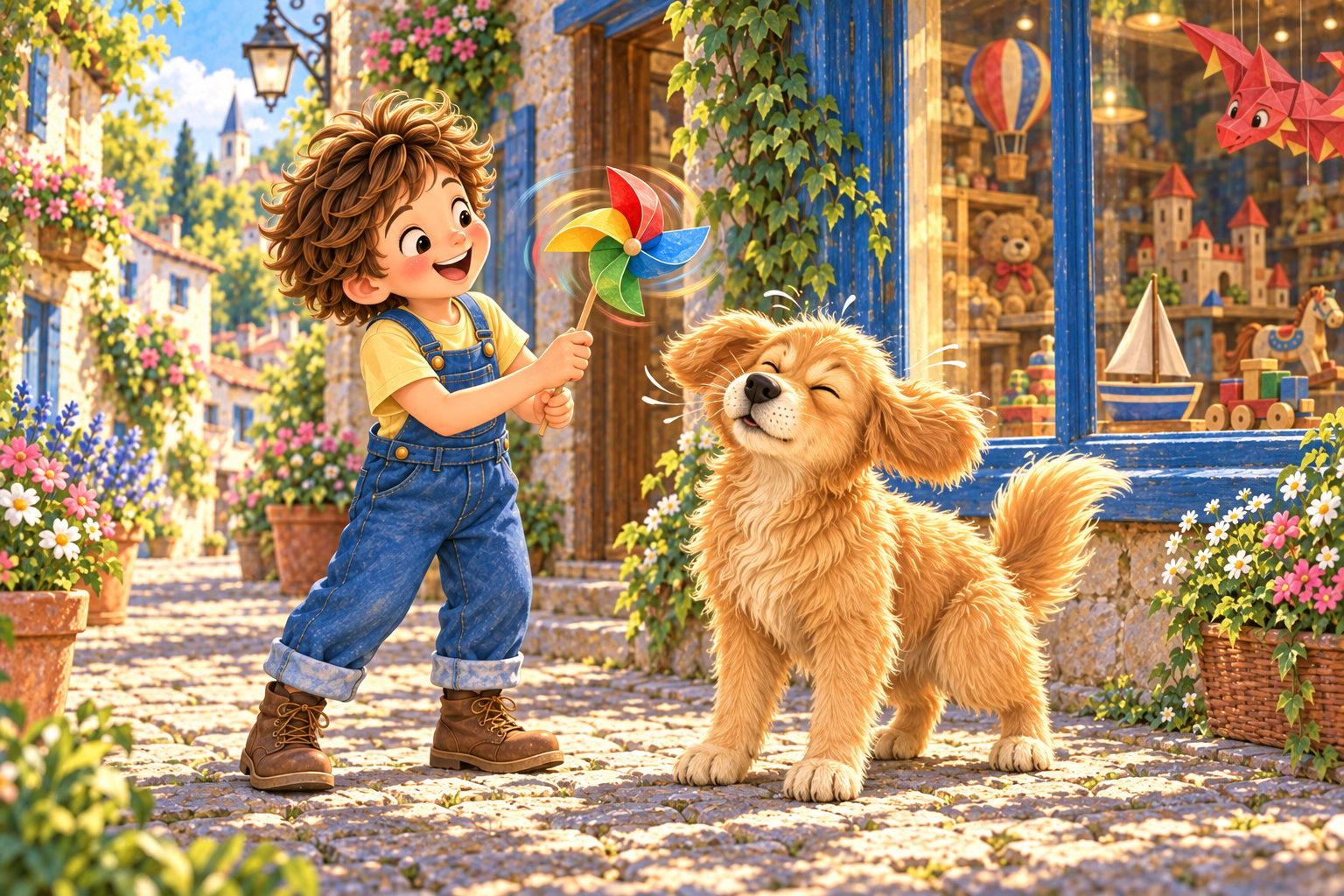
Alex soprou o catavento.
Frrrr!
Buddy espirrou.
O catavento girou ainda mais depressa.
Alex caiu na risada.
— Vamos levar esse. Acho que ele é movido a cachorro!
Alex blew on the pinwheel.
Whirrr!
Buddy sneezed.
The pinwheel spun even faster.
Alex burst out laughing.
“Let's get this one. I think it runs on dog!”
O catavento custou duas moedas.
Duas ficaram com o vendedor. Oito ficaram com Alex.
E durante todo o caminho de volta para casa, Alex e Buddy tiveram um ventinho só deles.
Às vezes, as moedas podem deixar o dia de hoje mais feliz.
The pinwheel cost two coins.
Two stayed with the shopkeeper. Eight stayed with Alex.
And all the way home, Alex and Buddy had a little wind of their very own.
Sometimes coins can make today a good day.
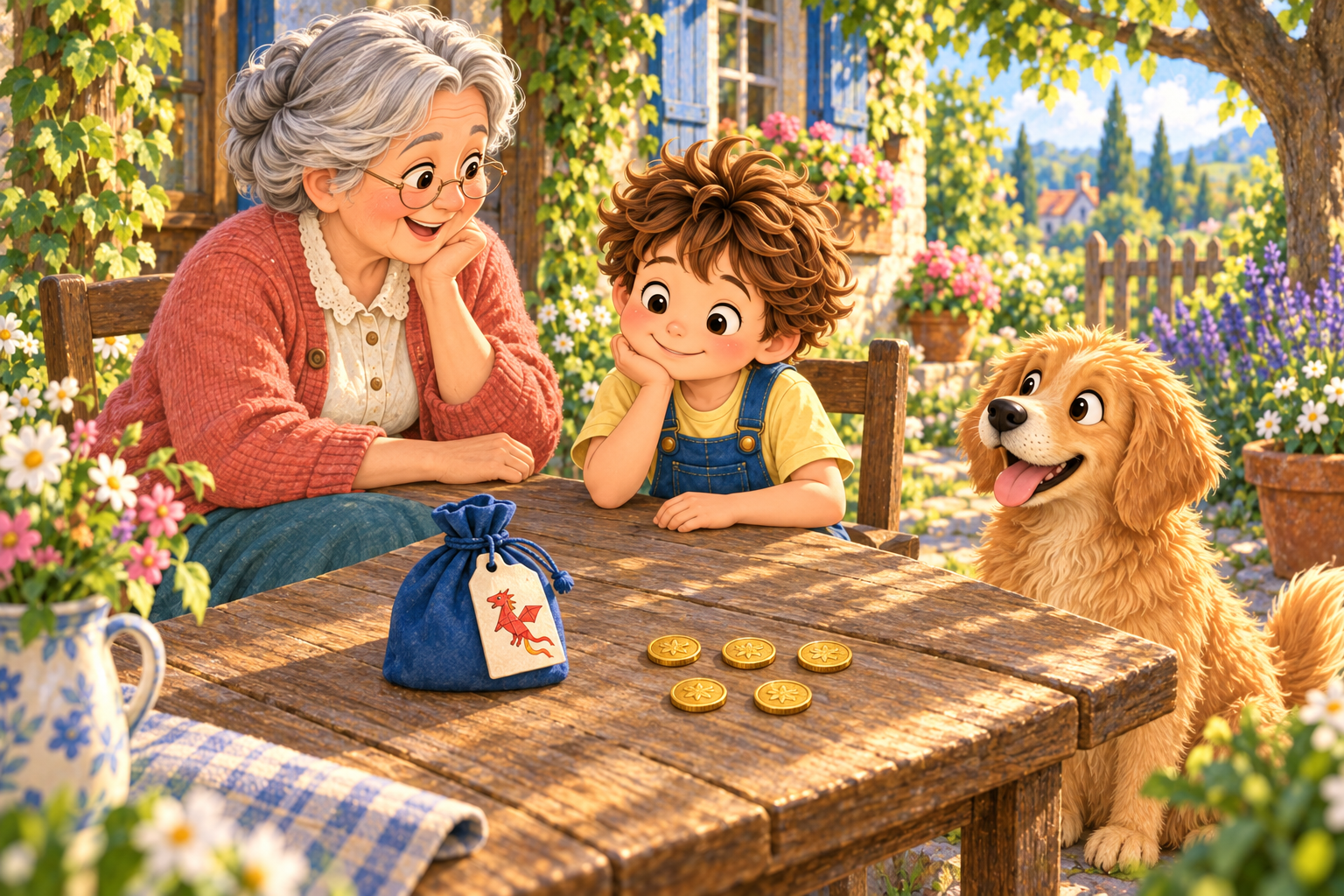
Em casa, Alex guardou três moedas num saquinho azul.
— Para o dragão grande. Um dia.
Ele desenhou um dragão na etiqueta e puxou o cordão para fechar o saquinho.
Aquelas moedas eram suas economias: dinheiro que ele guardava agora para usar mais tarde.
At home, Alex tucked three coins into a blue pouch.
“For the big dragon. Someday.”
He drew a dragon on the tag and pulled the pouch shut.
Those coins were his savings: money he was keeping now to use later.
Cinco moedas estavam sobre a mesa.
— Guardo essas também?
— Pode — disse a vovó. — Ou a gente pode descobrir o que é colocar dinheiro num negócio. Isso se chama investir.
Alex olhou para as moedas.
— Que tipo de negócio?
Five coins lay on the table.
“Should I put these away too?”
“You could,” said Grandma. “Or we could find out about putting money into a business. That's called investing.”
Alex looked at the coins.
“What kind of business?”
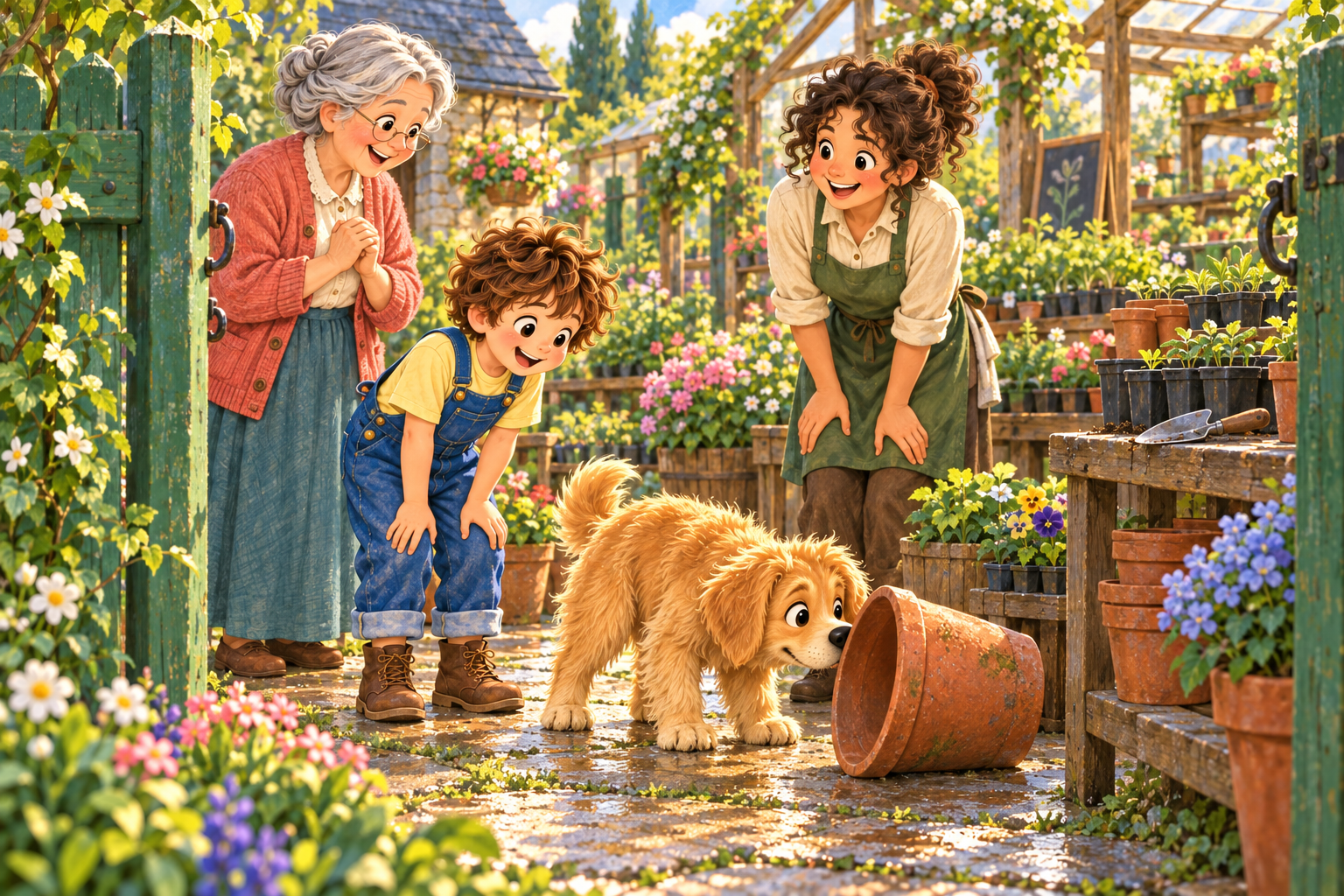
Atrás de um portão verde, os vizinhos cultivavam mudas para vender.
Ali havia cheiro de terra, de madeira molhada pela chuva e de primavera.
— Precisamos de bandejas novas e de sementes — contou a dona.
Buddy enfiou o focinho num vaso vazio.
O vaso espirrou.
Behind a green gate, their neighbors grew young plants to sell.
It smelled of soil and rain-soaked wood and spring.
“We need new trays and seeds,” the owner told them.
Buddy poked his nose into an empty flowerpot.
The flowerpot sneezed.
Alex tirou uma moeda.
— Então é para plantar?
Ele estendeu a mão para pegar uma pazinha.
Buddy abanou o rabo.
Enterrar coisas preciosas na terra — isso, sim, fazia sentido.
Alex took out a coin.
“So I plant it?”
He reached for a little shovel.
Buddy wagged his tail.
Burying precious things in the dirt—now, that made sense.
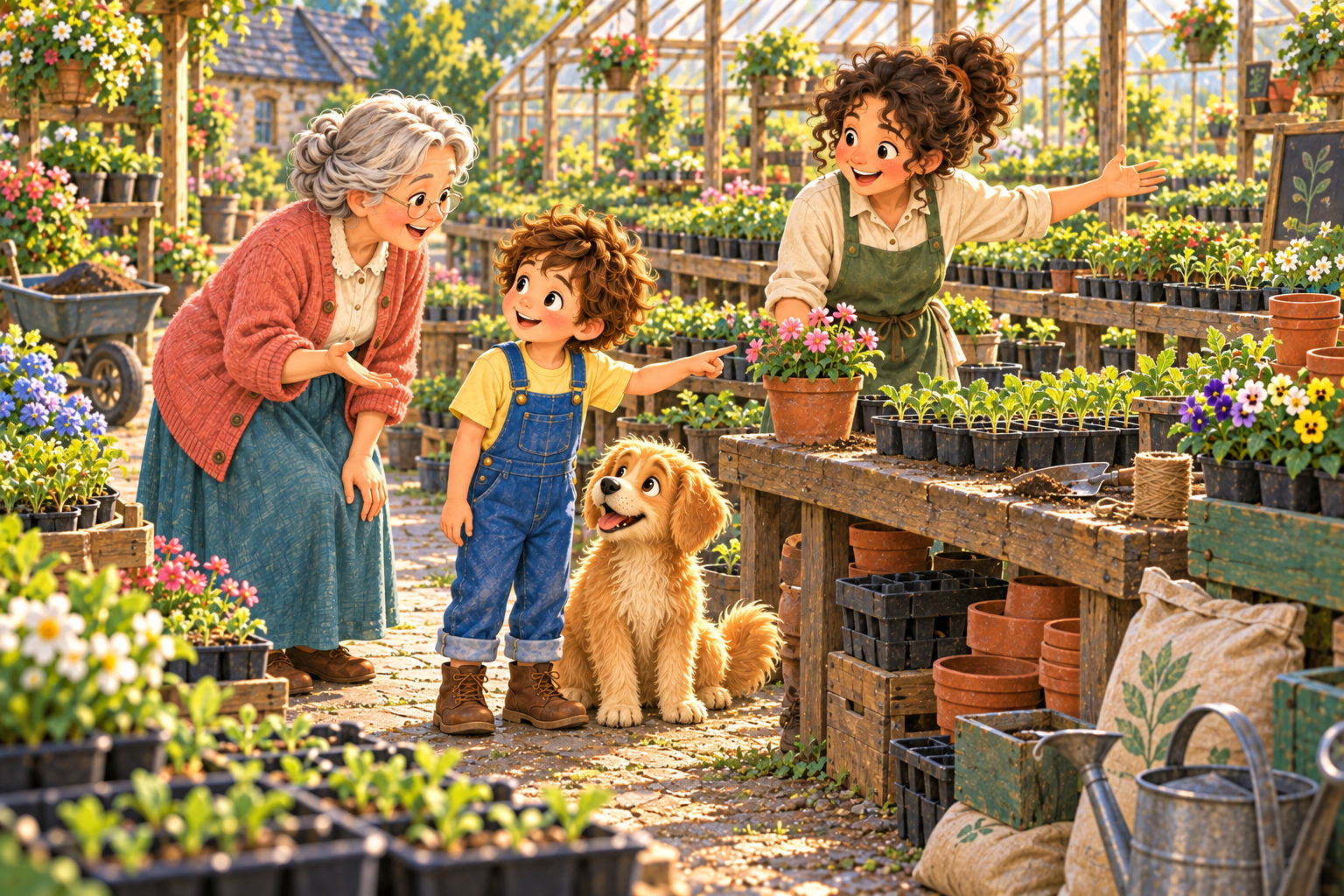
— Não — disse a vovó, sorrindo. — Uma moeda não cresce na terra.
— As pessoas usam o dinheiro para comprar sementes, bandejas e ferramentas. Depois trabalham bastante para cultivar plantas que outras pessoas queiram comprar.
— Então é o negócio que cresce?
— Essa é a ideia.
“No,” said Grandma, smiling. “A coin won't grow in the ground.”
“People use the money to buy seeds, trays, and tools. Then they work hard to grow plants that other people will want to buy.”
“So it's the business that grows?”
“That's the idea.”
A dona mostrou o viveiro de plantas para eles.
— Você poderia comprar uma pequena parte do nosso negócio. Assim, seria um dos donos.
— Aquela flor seria minha?
— Uma parte do negócio inteiro — explicou a vovó. — Não um vaso em particular.
The owner showed them around the plant nursery.
“You could buy a small share of our business. Then you'd be one of its owners.”
“Would that flower be mine?”
“A share of the whole business,” Grandma explained. “Not one particular flowerpot.”
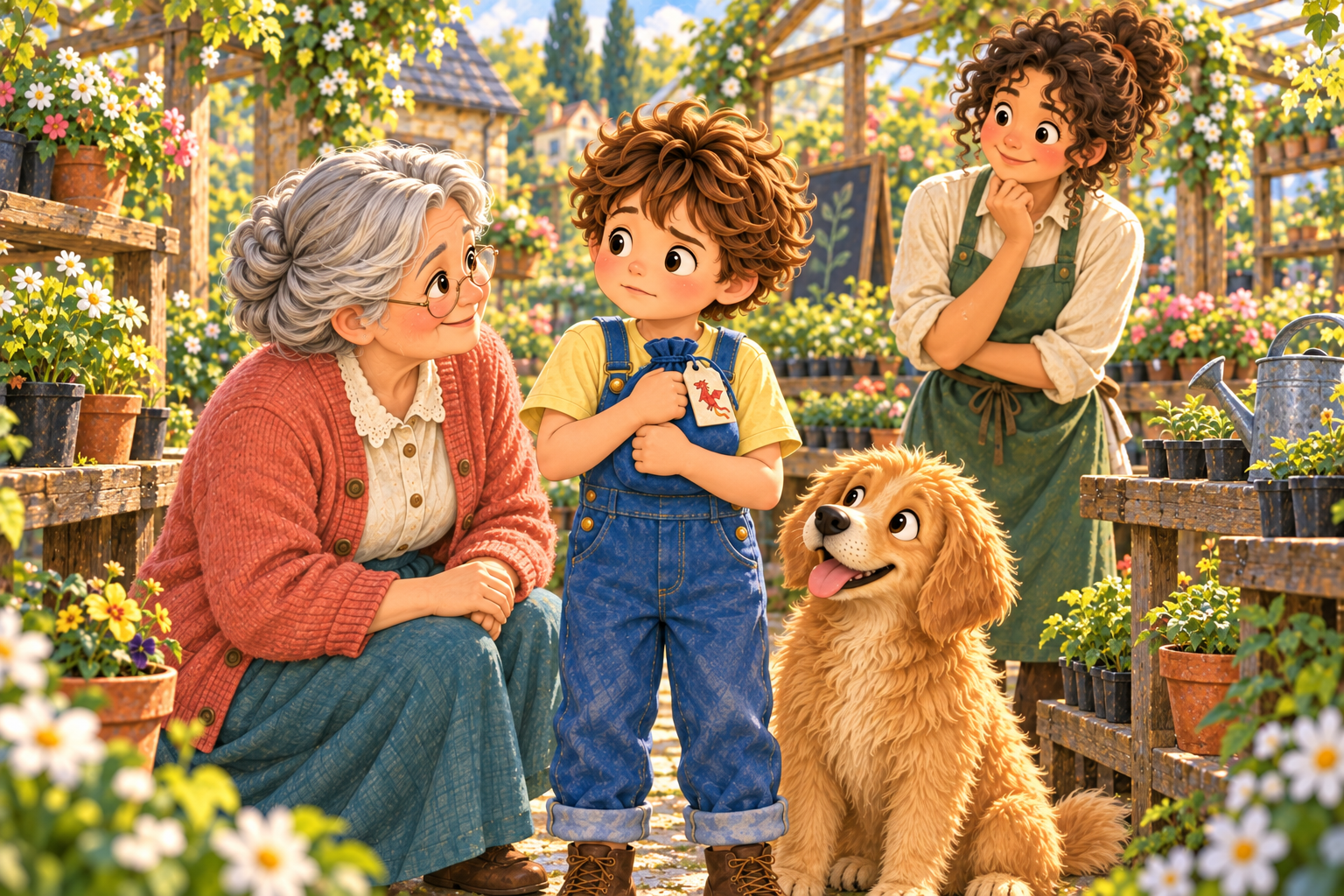
— Eu receberia algum dinheiro? — perguntou Alex.
— Talvez. Primeiro o negócio precisa pagar as contas. Se sobrar dinheiro depois disso, essa sobra se chama lucro. Os donos podem decidir dividir esse lucro entre eles.
— Mesmo se a minha parte do negócio for pequena?
— Aí a sua parte do lucro também seria pequena.
“Would I get any money?” asked Alex.
“Maybe. First the business has to pay its bills. If there's money left after that, it's called profit. The owners may decide to share it.”
“Even if my share of the business is little?”
“Then your part of the profit would be little too.”
— E se ninguém comprar as flores?
— O negócio pode perder dinheiro. E você pode perder uma parte do dinheiro que colocou nele. Ou tudo.
Alex ficou quieto por um instante.
— Então vou deixar as moedas do meu saquinho azul de fora. Preciso delas para o dragão.
“What if nobody buys the flowers?”
“The business could lose money. And you could lose some of the money you put in. Or all of it.”
Alex was quiet for a moment.
“Then I'm keeping the coins in my blue pouch out of this. I need those for the dragon.”
Com a ajuda da vovó, Alex investiu três moedas no negócio do viveiro.
Anotaram num caderno a pequena parte de Alex no negócio.
Aquelas três moedas já não estavam no bolso dele. Tinham ido para o negócio.
Duas moedas estavam na palma da mão dele.
E três continuavam guardadinhas no saquinho azul.
With Grandma's help, Alex put three coins into the nursery business.
They wrote down his little share in a notebook.
Those three coins weren't in his pocket anymore. They had gone into the business.
Two coins lay on his palm.
And three were still tucked away in the blue pouch.
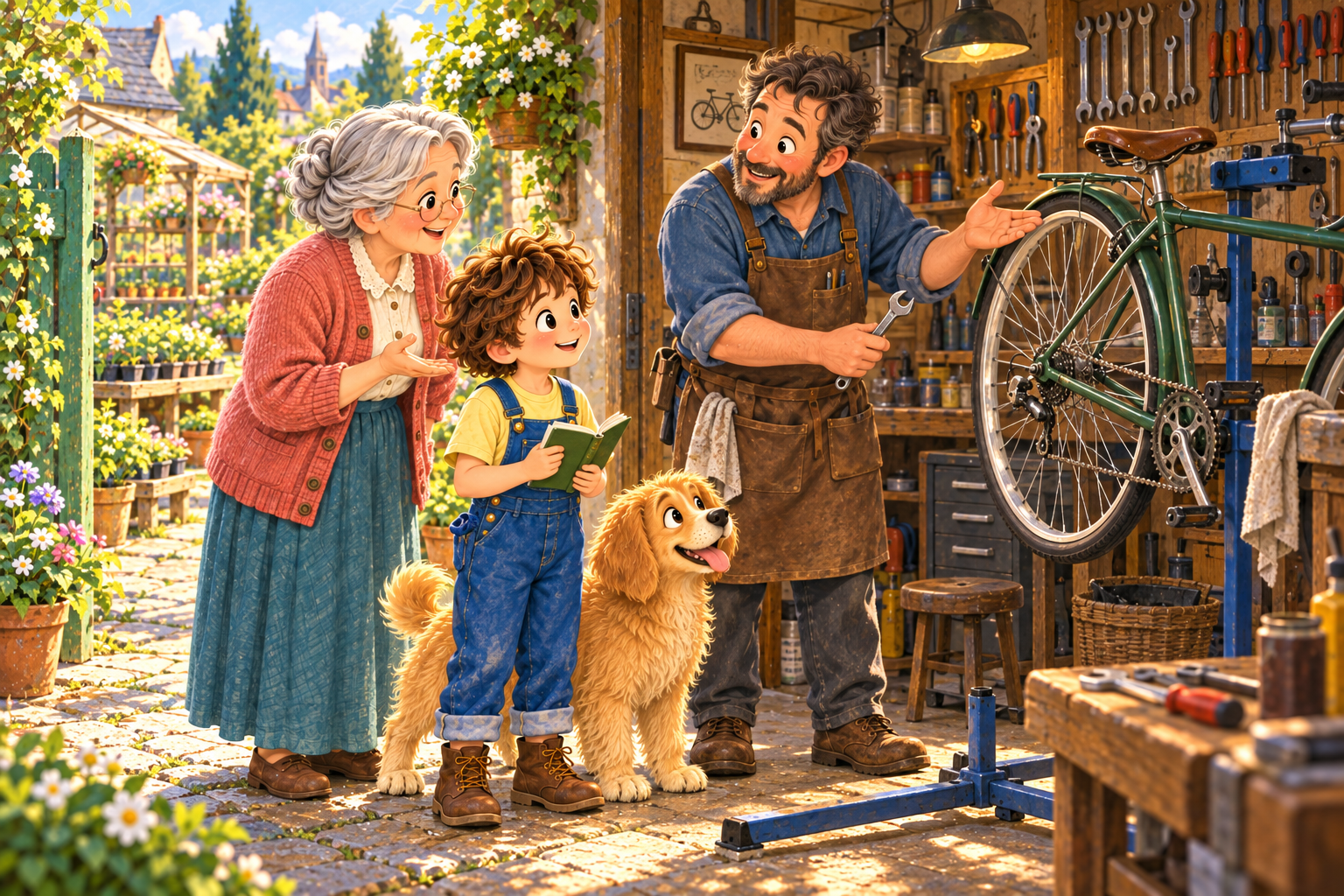
Ao lado havia uma oficina de conserto de bicicletas.
Trim! Soou uma campainha.
Ali precisavam de ferramentas em vez de sementes.
Alex e a vovó perguntaram ao mecânico sobre o trabalho dele e as contas que a oficina precisava pagar.
Alex decidiu usar as duas moedas que ainda tinha na mão para comprar uma pequena parte desse negócio também.
Next door was a bicycle repair shop.
Ding! went a bell.
This place needed tools instead of seeds.
Alex and Grandma asked the repairman about his work and what the shop had to pay for.
Alex decided to use his last two coins to buy a small share of this business too.
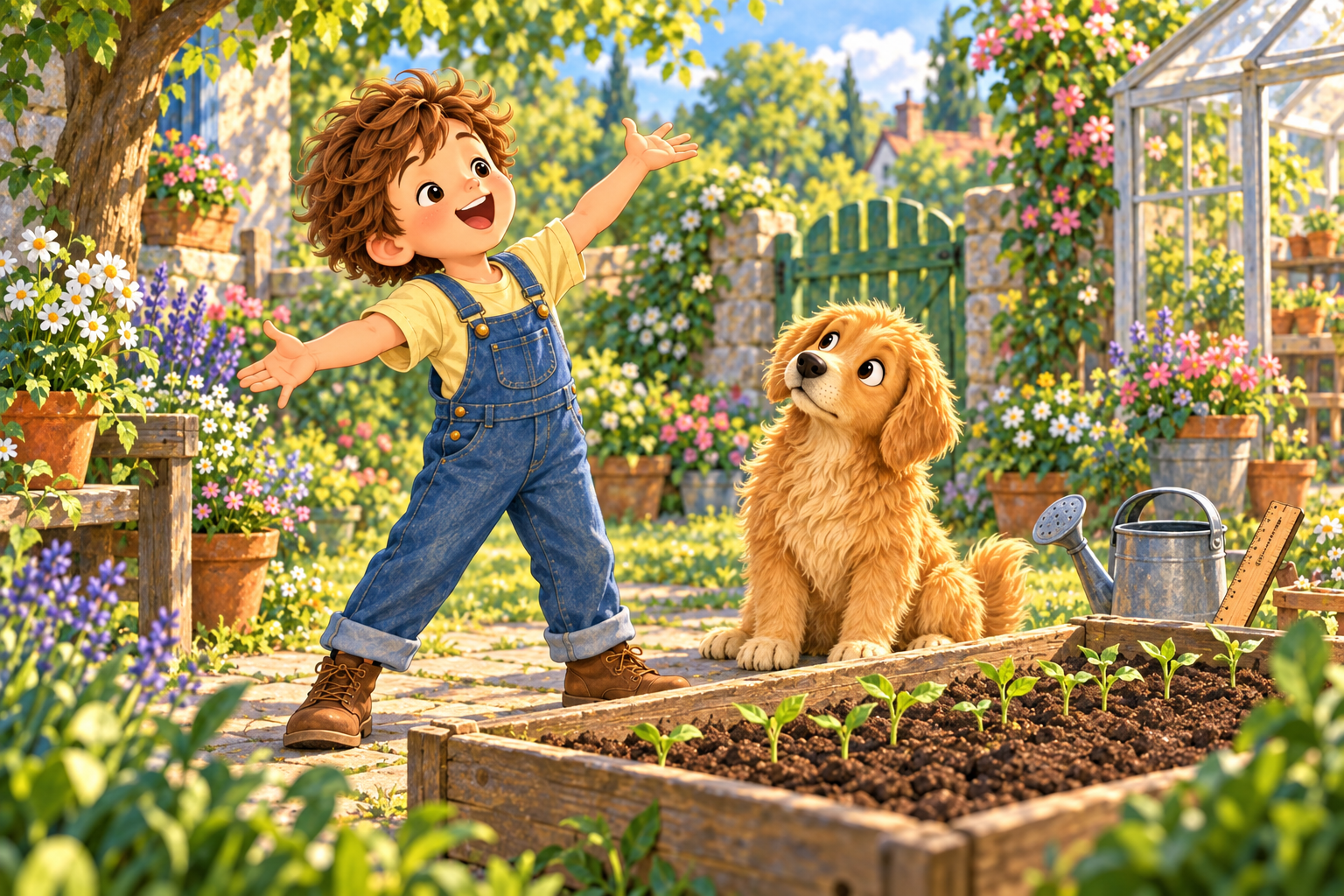
— Agora nem tudo depende das flores — disse Alex.
— Isso mesmo. Um negócio pode ir bem enquanto outro vai mal. Mas a oficina também pode perder dinheiro — disse a vovó.
Alex desenhou uma flor num cartão e uma roda em outro.
Buddy ficou de olho na roda.
“Now it doesn't all depend on the flowers,” said Alex.
“That's right. One business may do well while another doesn't. But the repair shop could lose money too,” said Grandma.
Alex drew a flower on one card and a wheel on another.
Buddy kept one eye on the wheel.
Na manhã seguinte, Alex correu até o viveiro com uma régua.
Depois, com um regador.
Depois, com uma música bem rápida sobre flores bem rápidas.
As flores escutaram.
E continuaram crescendo no seu próprio ritmo.
The next morning, Alex ran to the nursery with a ruler.
Then with a watering can.
Then with a very fast song about very fast flowers.
The flowers listened.
And carried on growing at their own speed.
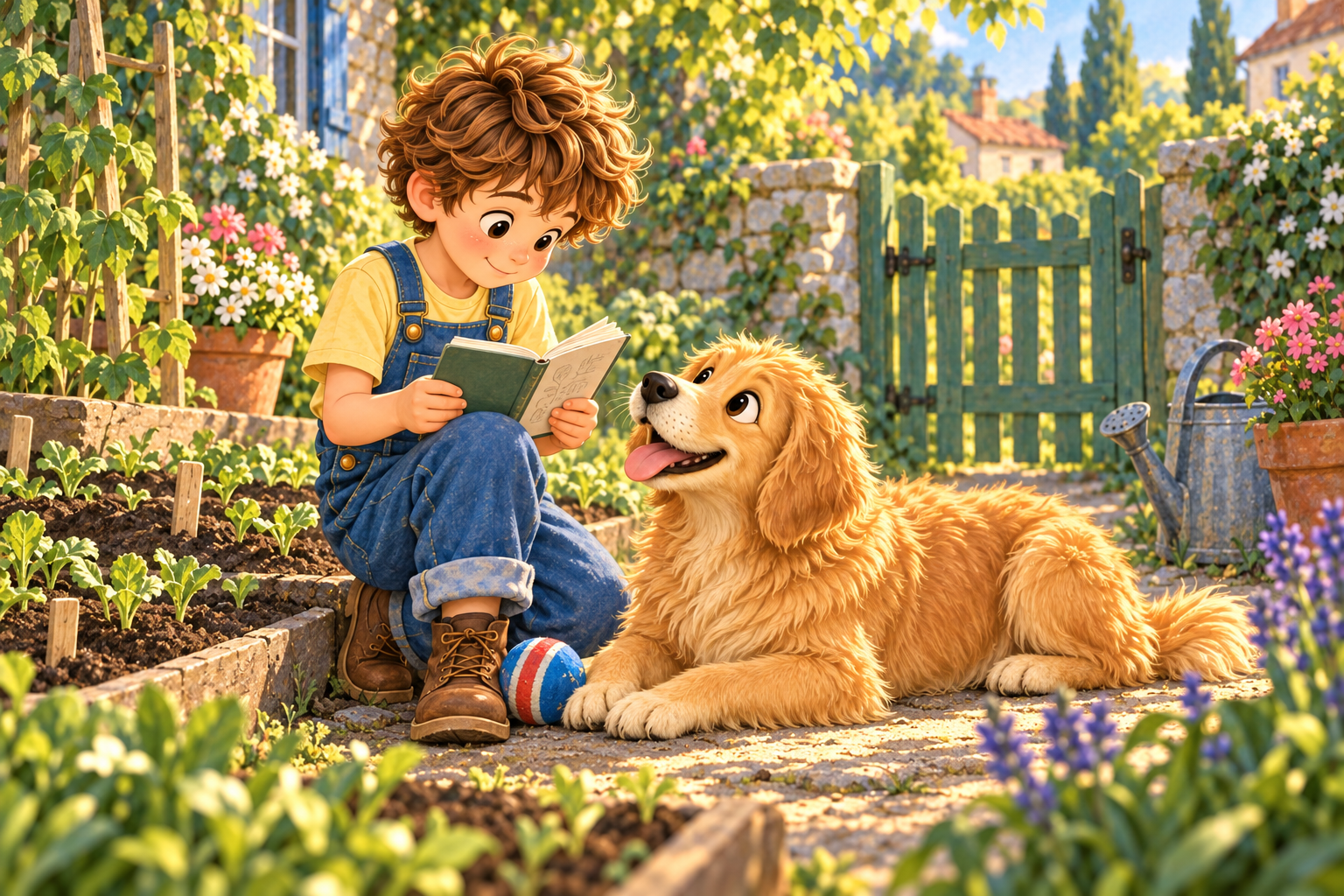
— Mas já é amanhã! — disse Alex no dia seguinte.
A vovó mostrou o calendário.
Uma página tinha dado lugar à outra. Mas não era só amanhecer para aparecerem novos clientes.
Alex virou mais uma página.
Só por garantia.
“But it's tomorrow already!” Alex said the next day.
Grandma showed him the calendar.
One page had given way to the next. But a new morning didn't bring new customers all by itself.
Alex turned another page.
Just in case.
Buddy trouxe sua bola.
Alex olhava para as mudas.
Buddy colocou a bola em cima do sapato de Alex.
Alex conferiu o caderno.
Então Buddy se deitou atravessado no caminho.
Alguém naquele jardim não estava esperando por dinheiro.
Estava esperando por Alex.
Buddy brought his ball.
Alex watched the seedlings.
Buddy put the ball on Alex's shoe.
Alex checked the notebook.
So Buddy lay right across the path.
Someone in this garden wasn't waiting for money.
He was waiting for Alex.
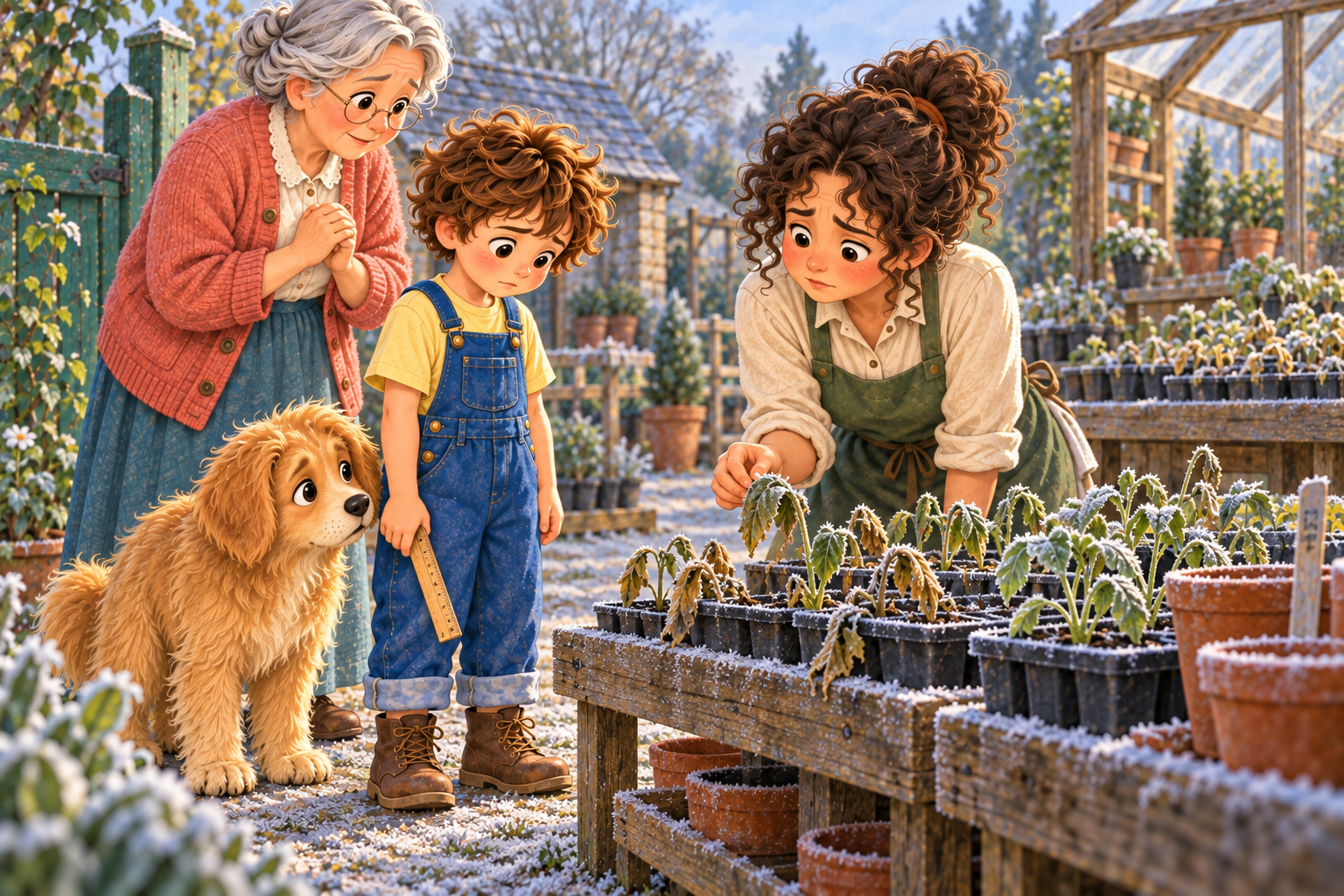
Uma noite, uma geada inesperada chegou de mansinho.
De manhã, algumas mudas tinham murchado.
A dona levantou as folhinhas com cuidado. Mas algumas plantas não puderam ser salvas.
Alex parou de girar a régua entre as mãos.
O jardim estava muito quieto.
One night, an unexpected frost crept in.
By morning, some of the seedlings had wilted.
The owner gently lifted their little leaves. But some of the plants couldn't be saved.
Alex stopped turning the ruler in his hands.
The garden was very quiet.
— Não vamos poder vender estas plantas — disse a dona.
O dinheiro das sementes e das bandejas já tinha sido gasto. O viveiro não tinha ganhado o suficiente para cobrir todos esses gastos.
O negócio tinha perdido dinheiro. A pequena parte de Alex no negócio também valia menos agora.
De repente, ele sentiu uma vontade enorme de ver suas três moedas outra vez.
“We won't be able to sell these plants,” said the owner.
The money for their seeds and trays had already been spent. The nursery hadn't earned enough to cover all those costs.
The business had lost money. Alex's little share was worth less now too.
All at once, he wished he could see his three coins again.
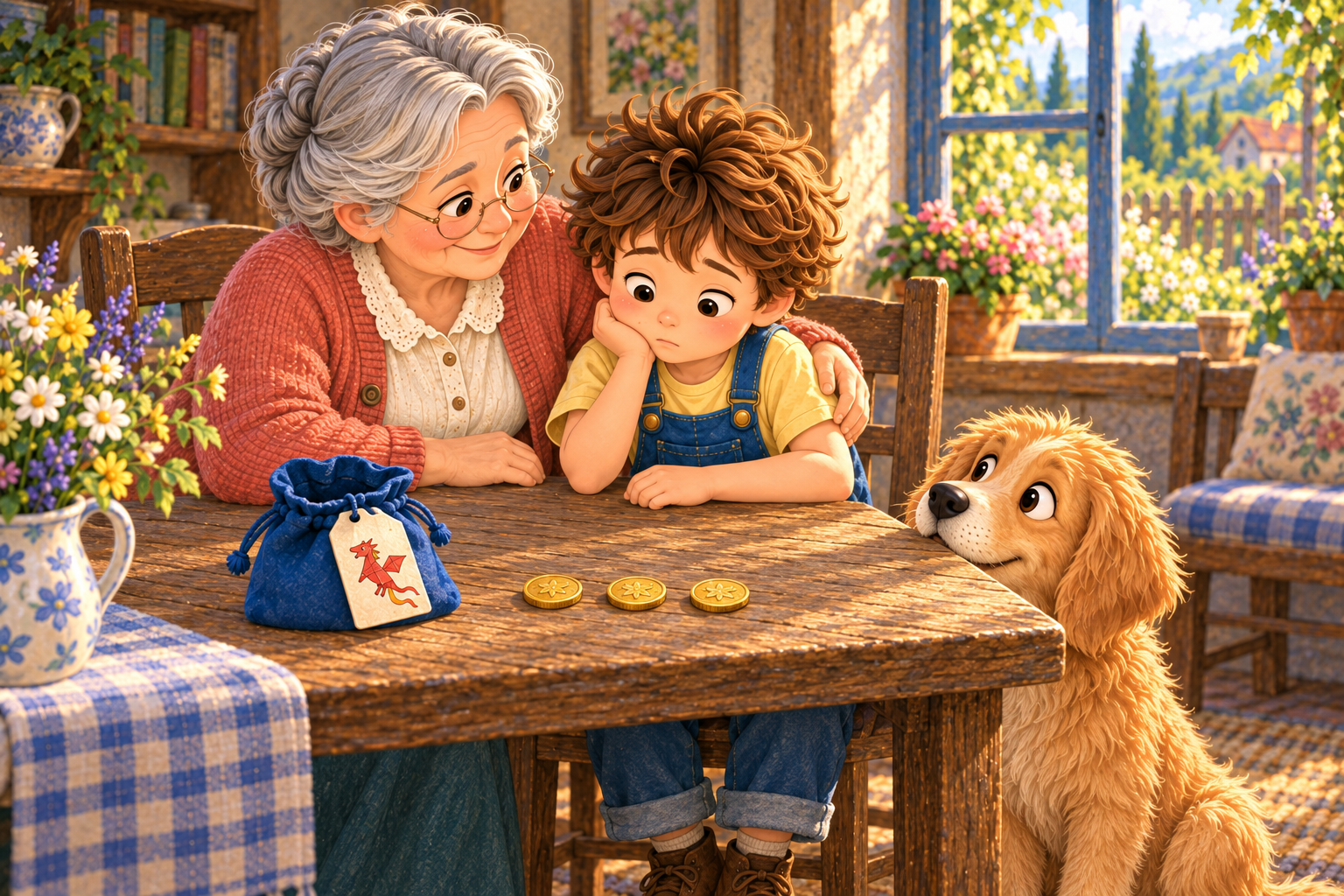
— Foi porque eu fiquei tentando apressar tudo?
— Não — disse a vovó. — A geada não veio por sua causa. Até um bom negócio pode passar por dificuldades.
— Se eu esperar mais, tudo volta?
A vovó abraçou Alex.
— Talvez. Mas ninguém pode prometer.
“Was it because I kept trying to hurry things?”
“No,” said Grandma. “You didn't bring the frost. Even a good business can run into trouble.”
“If I wait longer, will it all come back?”
Grandma put her arms around him.
“It might. But no one can promise.”
Em casa, Alex abriu o saquinho azul.
Uma. Duas. Três.
As moedas que ele tinha guardado continuavam ali. Ele não tinha colocado aquelas moedas no viveiro.
E tinha colocado outras duas moedas na oficina — um negócio completamente diferente.
Alex puxou o cordão e fechou o saquinho de novo.
At home, Alex opened the blue pouch.
One. Two. Three.
His saved coins were still there. He hadn't put them into the nursery.
He had put two coins into the repair shop—a different business altogether.
Alex pulled the pouch shut again.
No dia seguinte, Alex pegou a régua outra vez.
Ficou parado junto à porta.
Depois, colocou a régua de volta.
— Vamos, Buddy. Posso ver como estão as coisas mais tarde.
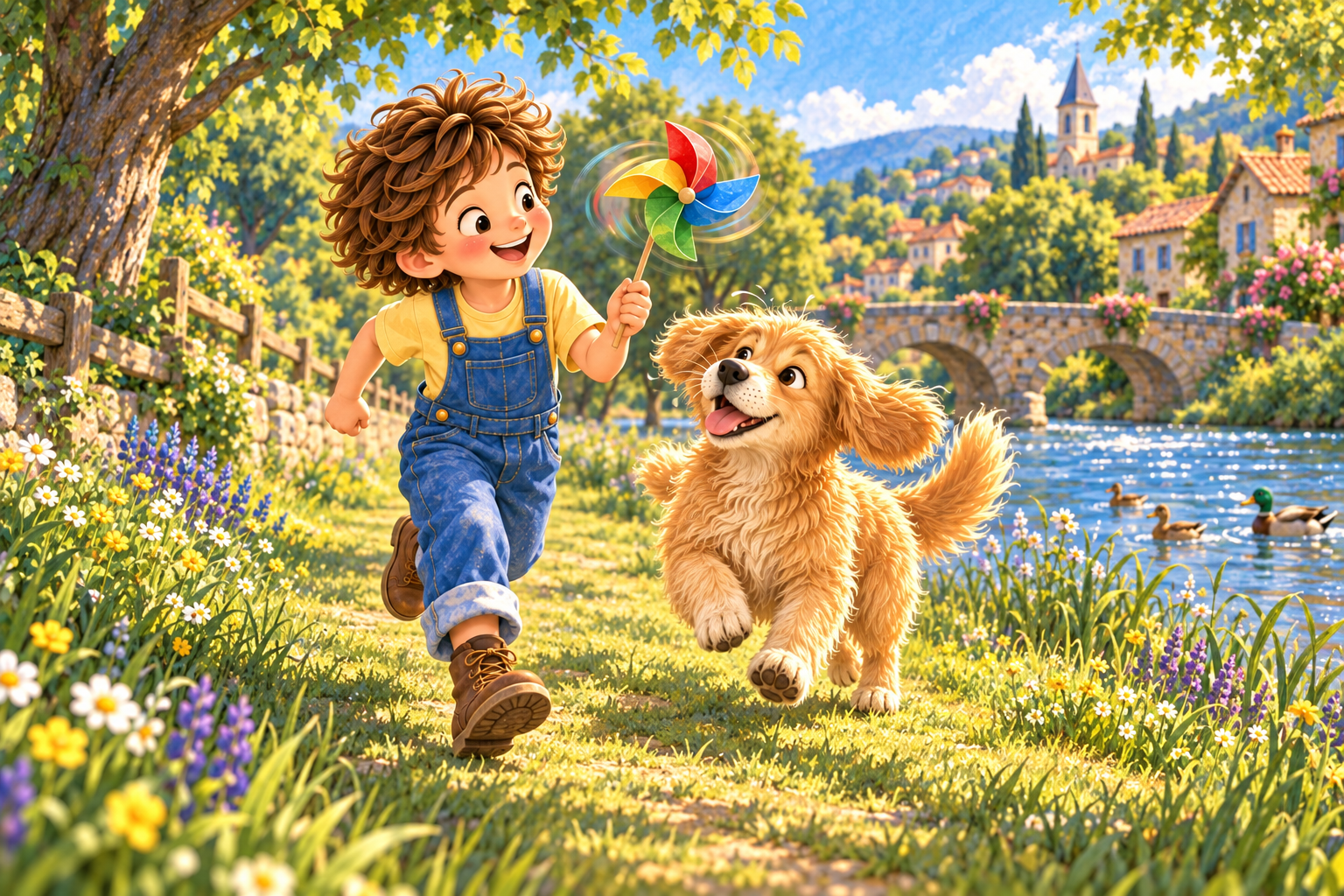
Os dois correram até o rio.
O catavento girou tão depressa que parecia ter encontrado, enfim, um plano só dele.
The next day, Alex picked up the ruler again.
He stood by the door.
Then he put it back.
“Come on, Buddy. I can check on things later.”
They ran down to the river.
The pinwheel spun so fast, it seemed to have a plan of its own at last.
As poças da primavera secaram.
As sandálias deram lugar às botas.
Alex cresceu e um de seus casacos ficou pequeno. Buddy continuou com todos os seus velhos hábitos.
Durante todo esse tempo, as pessoas continuaram trabalhando no viveiro e na oficina.
Em alguns dias, as coisas iam bem. Em outros, não.
The spring puddles dried up.
Sandals gave way to boots.
Alex outgrew a jacket. Buddy didn't outgrow a single habit.
All that time, people kept working at the nursery and the repair shop.
Some days went well. Some didn't.
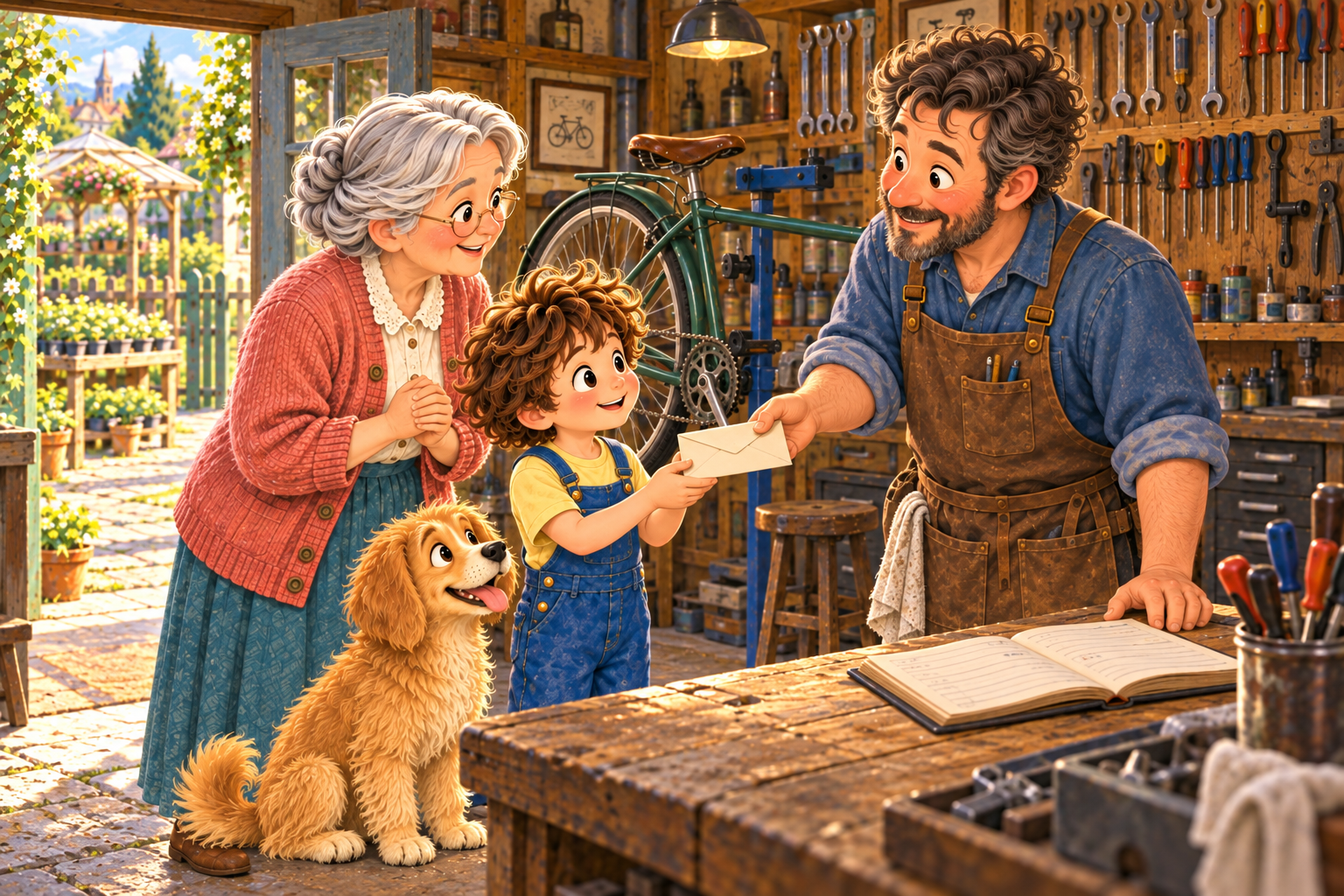
Um dia, depois de pagar todas as contas, a oficina teve lucro.
Os donos decidiram dividir uma parte desse lucro entre eles. Alex também recebeu um pouquinho.
— Por ter esperado?
— Por ser dono de uma parte do negócio — explicou a vovó. — As pessoas trabalharam bastante e, desta vez, o negócio ganhou dinheiro.
One day, after paying all its bills, the repair shop had made a profit.
The owners decided to share some of it. Alex received a little of it too.
“For waiting?”
“For owning a share of the business,” Grandma explained. “People worked hard, and this time the business made money.”
O viveiro ainda não tinha se recuperado das perdas.
Alex ainda não tinha comprado o grande dragão de papel.
Mas agora ele sabia: o dinheiro que se deixa para o futuro pode esperar de mais de um jeito.
Uma parte ficava num saquinho.
Outra ia para um negócio, onde ninguém sabia ao certo o que aconteceria depois.
The nursery still hadn't recovered from its losses.
Alex still hadn't bought the big paper dragon.
But now he knew there was more than one way for money to wait for the future.
Some stayed in a pouch.
Some went into a business, where no one knew for certain what would happen next.
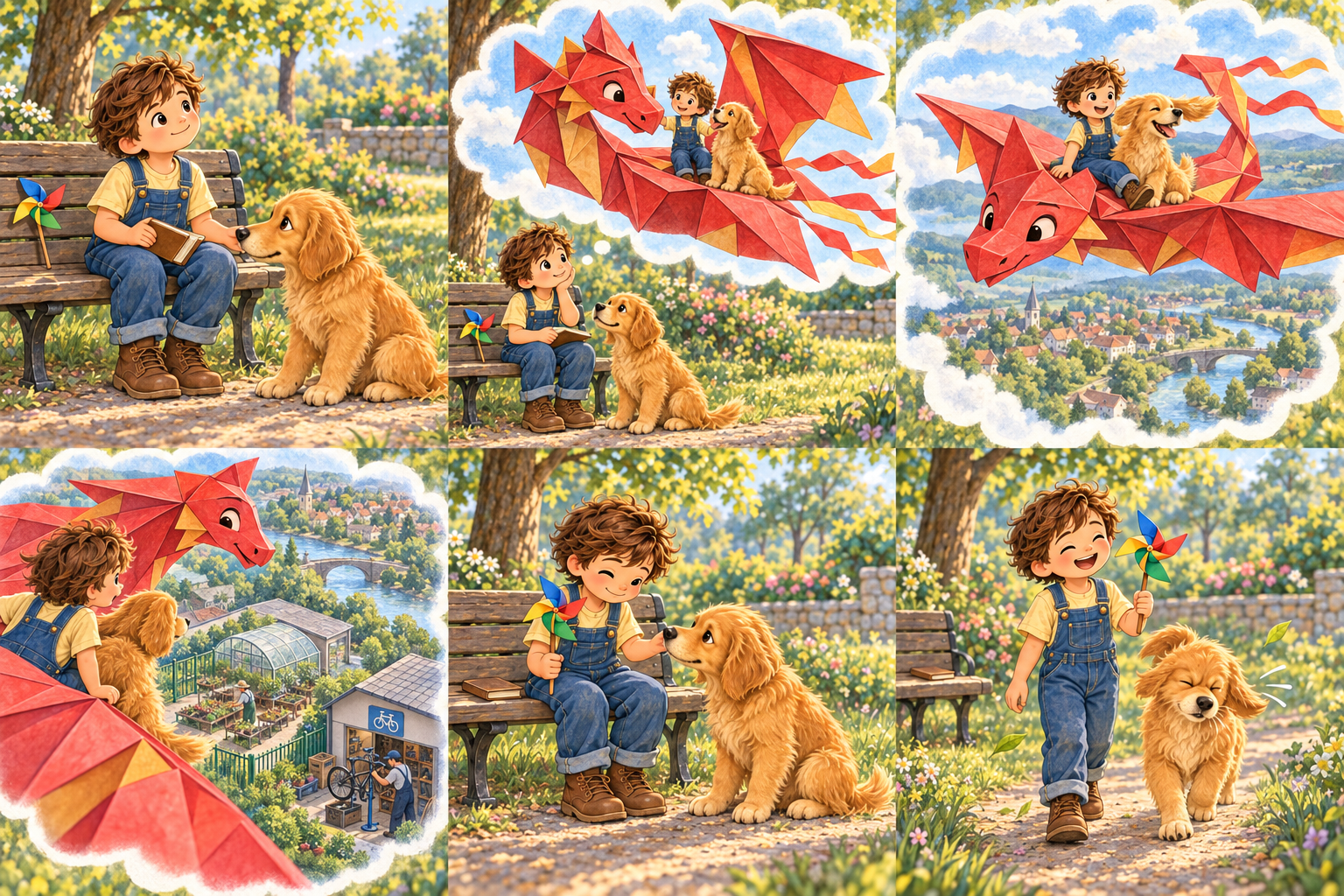
Buddy cutucou a mão de Alex com o focinho.
Alex deixou o caderno de lado.
E se, um dia…
Ele imaginou o dragão vermelho de papel abaixando as costas largas para recebê-los. Então subiram de mansinho, acima dos telhados. As orelhas de Buddy tremulavam como bandeiras.
Lá embaixo, a dona cuidava das mudas que tinham sobrevivido. O mecânico consertava uma bicicleta. As cinco moedas de Alex tinham ajudado a comprar sementes e ferramentas.
Buddy cutucou a mão dele com o focinho outra vez. Alex piscou.
Ele pegou o catavento.
Frrrr!
Buddy espirrou.
Lá foram os dois, juntos.
Algumas coisas boas não precisavam esperar.
Buddy nudged Alex’s hand.
Alex put his notebook aside.
What if, one day…
He imagined the red paper dragon dipping its broad back to welcome them aboard. Then up they went, gently, over the rooftops. Buddy’s ears flew like flags.
Below, the gardener tended surviving seedlings. The mechanic mended a bicycle. Alex’s five coins had helped buy seeds and tools.
Buddy nudged his hand again. Alex blinked.
He picked up his pinwheel.
Whirrr!
Buddy sneezed.
Off they went, together.
Some good things didn’t have to wait.
Imagine que estas dez moedas são suas.
Quais você gastaria agora? Quais guardaria? E quais, se quisesse, poderia colocar num negócio com a ajuda de um adulto?
Pegue dez botões ou desenhe dez moedas. Crie um plano do seu jeito.
Imagine these ten coins are yours.
Which would you spend now? Which would you save? Which, if any, might you put into a business with a grown-up's help?
Find ten buttons or draw ten coins. Make a plan of your own.
Divida suas dez moedas de faz de conta entre três espaços: Gastar, Guardar e Investir. Você pode deixar qualquer um deles vazio.
Você não precisa escolher o mesmo que Alex escolheu.
Para que você quer seu dinheiro? Quanto tempo estaria disposto a esperar? O que mudaria se o dinheiro que você investiu não voltasse?
Conte seu plano para um adulto.
Divide your ten pretend coins among three places: Spend, Save, and Invest. You can leave any place empty.
You don't have to choose what Alex chose.
What do you want your money for? How long would you be willing to wait? What would change if the money you invested didn't come back?
Tell a grown-up about your plan.
Esta história é um convite para conversar, não uma orientação sobre onde investir. A compra de participações em pequenos negócios foi simplificada de propósito. As moedas são unidades imaginárias, e as escolhas de Alex não são um modelo para dividir o dinheiro de uma família.
Guardar dinheiro e investir são coisas diferentes. O dinheiro num saquinho não cresce sozinho. Ter uma parte de um negócio significa ser um dos donos, não ter o direito de levar uma determinada flor, ferramenta ou dinheiro do caixa.
Vendas não são o mesmo que lucro: um negócio tem gastos a cobrir. Os donos podem manter o lucro no negócio ou distribuir uma parte entre eles. Pode não haver pagamento algum. O pagamento desta história não é a devolução do dinheiro que Alex investiu no início.
É possível perder uma parte ou todo o dinheiro colocado num investimento. Investimentos diferentes podem reduzir a dependência de um só negócio, mas não eliminam o risco. Os dois negócios da história são apenas um primeiro contato com essa ideia. O tempo não garante crescimento nem recuperação depois de uma perda.
Pergunte: “Por que uma moeda não brota na terra? Qual é a diferença entre ser dono de uma parte do negócio e comprar uma flor? Por que Alex manteve seu saquinho azul?” Evite chamar as escolhas da criança sobre as moedas de faz de conta de “espertas” ou “bobas”.
Uma criança não é responsável pela renda da família e não tem obrigação de investir. Qualquer decisão real sobre o dinheiro de uma criança precisa da participação de um adulto responsável.
This story is an invitation to talk, not advice about where to invest. Buying shares in small businesses is deliberately simplified here. The coins are imaginary units, and Alex's choices are not a model for dividing up a family's money.
Saving and investing are different. Money in a pouch doesn't grow by itself. A share means part ownership of a business, not the right to take a particular flower, tool, or money from the cash register.
Sales aren't the same as profit: a business has costs to cover. The owners may keep profits in the business or distribute some to its owners. There may be no payment at all. The payment in this story is not a return of Alex's original investment.
An investment can lose some or all of the money put into it. Different investments can reduce dependence on one business, but they don't remove risk. The story's two businesses offer only a first glimpse of that idea. Time doesn't guarantee growth or recovery from a loss.
Ask: “Why won't a coin sprout in the ground? How is owning a share different from buying a flower? Why did Alex keep his blue pouch?” Avoid calling a child's choices about the pretend coins “smart” or “silly.”
A child is not responsible for the family's income and does not have to invest. Any real decisions about a child's money need a responsible adult's involvement.